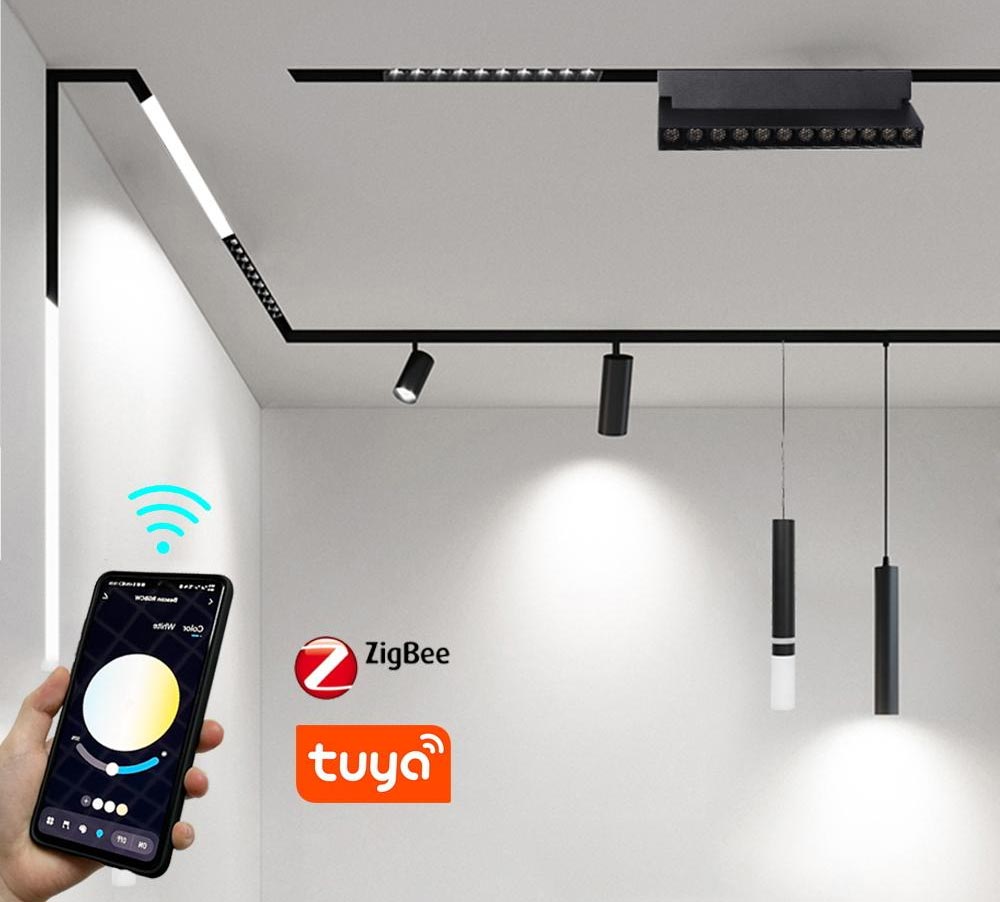
3000K Magnetic Lighting in Warm Interior Spaces
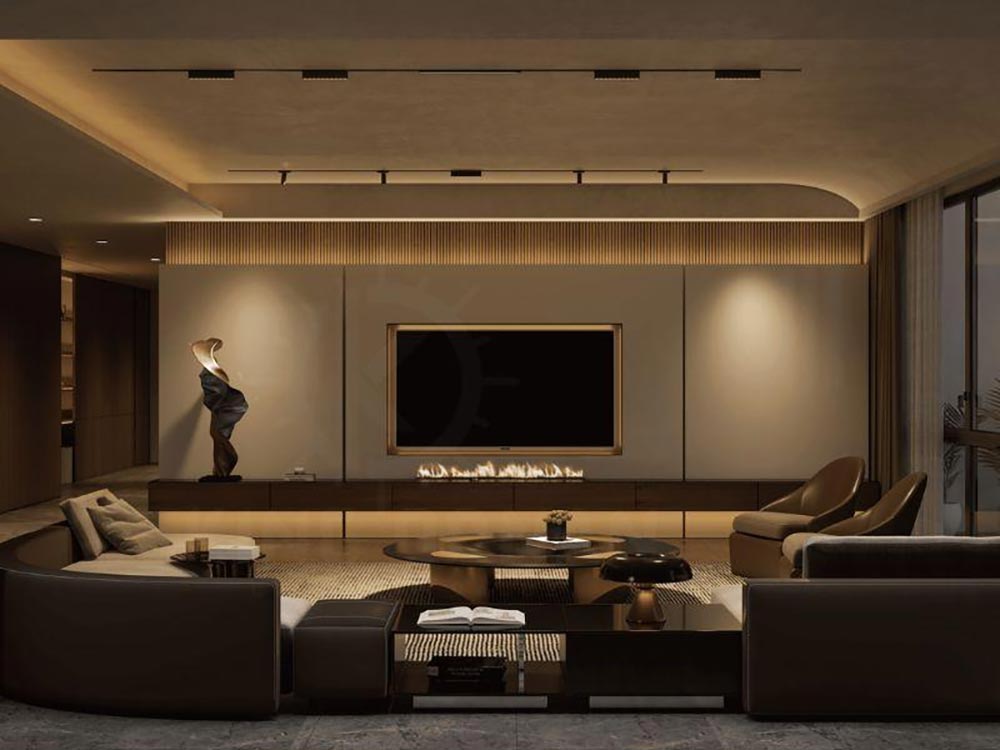
3000K is widely used in spaces where atmosphere is more important than brightness.
In magnetic lighting systems, it is often used to build a soft background layer rather than strong visual focus.
You will usually see it in residential living rooms, bedrooms, hotel suites, and lounge spaces where the goal is to reduce visual tension and create a calm environment.
On materials like wood, fabric, and warm-tone finishes, 3000K enhances depth and softness instead of highlighting contrast.
3500K Magnetic Lighting in Mixed-Use Interior Design
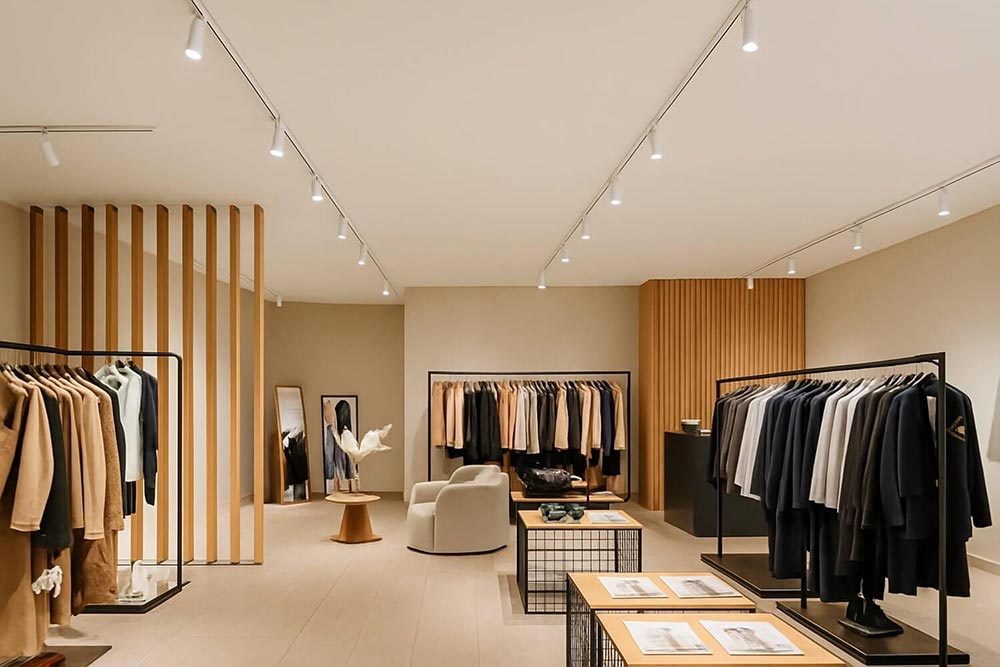
3500K sits between warm and neutral white, which makes it the most commonly used option in real projects.
In magnetic lighting systems, this color temperature is often used when one space needs to support multiple functions.
Retail stores, cafés, and modern residential interiors often rely on 3500K because it keeps the environment comfortable while still maintaining clarity.
Compared with 3000K, it increases object visibility without making the space feel cold.
4000K Magnetic Lighting for Commercial and Display Spaces
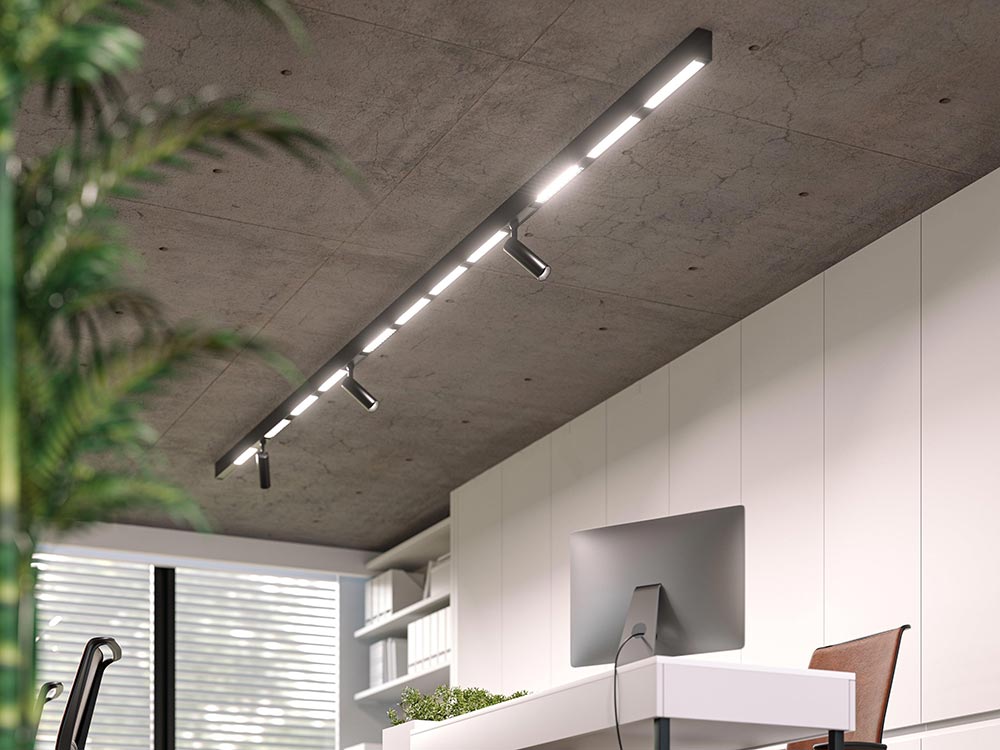
4000K is commonly used in spaces that require strong visual clarity.
In magnetic lighting systems, it is often applied to retail displays, showrooms, offices, and workspaces where product detail and visibility are important.
Compared to warmer temperatures, 4000K produces a cleaner and more technical appearance, especially on white, metal, and glass materials.
Mixing 3000K / 3500K / 4000K in One Magnetic Lighting System
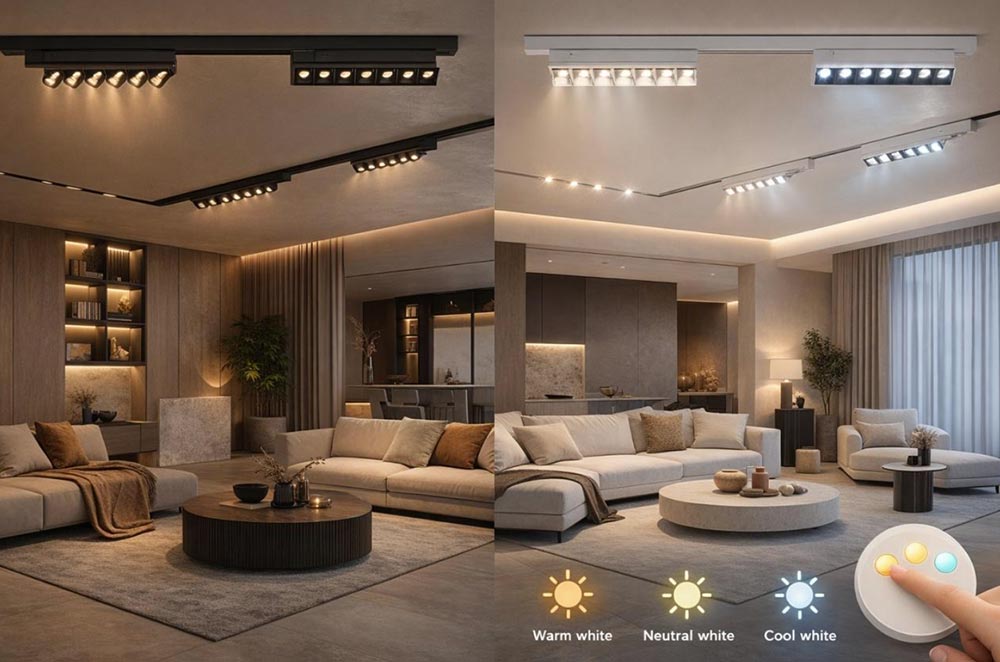
In many architectural projects, magnetic lighting systems do not rely on a single color temperature.
Different zones often use different Kelvin levels:
- 3000K for ambient comfort areas
- 3500K for general mixed-use zones
- 4000K for product or task-focused areas
This layering creates visual hierarchy without changing the physical layout of the system.
Common Color Temperature Choices in Real Projects
In real applications, the choice is usually not about a single Kelvin value, but about combining them in a structured way based on space function.
Residential projects often stay within 3000K–3500K range, while commercial projects tend to move between 3500K and 4000K depending on display requirements.
Modern magnetic lighting systems are no longer limited to fixed color temperatures.
With 48V magnetic track systems, lighting can be configured as tunable white (typically 2700K–5700K), allowing continuous adjustment of both atmosphere and visual performance within a single system. Instead of selecting a single Kelvin value during installation, the system can dynamically shift between warm, neutral, and cool white depending on the scene requirement.
This makes the lighting system adaptable for:
- Residential comfort lighting
- Retail display optimization
- Office task lighting
- Hospitality mood control
48V Magnetic Track Systems with Tunable White Capability
In 48V magnetic lighting systems, tunable white is achieved through dual-channel LED architecture, allowing independent control of warm and cool LED chips.
This enables smooth adjustment across a wide Kelvin range such as:
2700K → warm ambient atmosphere
4000K → neutral functional lighting
5700K → high-clarity task or display lighting
The system maintains consistent brightness output while adjusting color temperature dynamically.
Smart Control Integration: Tuya / DALI / Zigbee
Magnetic lighting systems with tunable white functionality can be integrated with multiple control protocols depending on project requirements:
Tuya Smart Control
- App-based wireless control
- Scene presets (work / relax / display mode)
- Suitable for residential and light commercial projects
DALI Control System
- Professional-grade lighting control
- Precise dimming + color temperature adjustment
- Widely used in architectural and commercial projects
Zigbee Wireless Control
- Smart building integration
- Works with automation ecosystems
- Flexible multi-zone lighting control
These control systems allow magnetic lighting to move beyond static illumination into dynamic environmental lighting.