Latest Electronics News & Trends | Expert Insights & Innovations

3500nits COB P1.25 Setting a New Standard for Ultra-Fine Outdoor LED Displays

1. Technological Breakthrough: 3500nits Brightness, Built for Outdoor Excellence

In the outdoor LED display industry, brightness is one of the most critical factors influencing visibility. Currently, most COB modules on the market offer 2000–3000nits for outdoor use—adequate for basic sunlight readability, but not always enough to maintain vivid clarity under extreme lighting.
CNLC’s latest COB P1.25 high-brightness module, powered by advanced packaging techniques and refined optical design, has achieved 3500nits brightness and passed rigorous outdoor performance certifications.
This significant leap ensures exceptional visibility even under intense midday sunlight, while maintaining vivid colors and fine details in cloudy, dusk, or backlit conditions—delivering an elevated visual experience for outdoor digital displays.


2. COB Advantages & Trends in Outdoor Applications

  • All-Day Readability
    High brightness combined with high contrast and anti-glare treatment ensures clear and sharp visuals under varying outdoor lighting conditions, from early morning to late evening.

  • Comprehensive Protection for Harsh Environments
    COB’s fully integrated packaging eliminates exposed lamp beads, significantly improving dust-proof, water-resistant, and impact-resistant performance—ideal for humid, dusty, and high-contact outdoor locations.

  • Breaking Boundaries for Ultra-Fine Outdoor Pitch
    Previously, pitches below P1.5 were largely limited to indoor environments. With 3500nits brightness, the P1.25 COB module brings ultra-fine image quality to outdoor settings, ideal for close-up viewing and high-definition advertising.

  • Longer Lifespan & Lower Maintenance
    Robust packaging protects chips from oxidation, static, and mechanical damage, while optimized thermal management ensures long-term stable performance in outdoor high-brightness operations, reducing maintenance and operating costs.


3. CNLC’s Outdoor-Focused R&D Direction

  • Pushing Brightness Boundaries
    Continue advancing COB brightness while maintaining efficiency and durability, meeting the demands of extreme lighting environments in high-end outdoor projects.

  • Efficient Thermal Management
    Develop next-generation cooling solutions to ensure stable operation and extended lifespan during prolonged high-brightness outdoor use.

  • Expanding Application Scenarios
    Drive COB adoption in outdoor billboards, smart city information displays, transportation hubs, retail storefronts, and sports stadiums.


4. Conclusion

The 3500nits COB P1.25 is not just a leap in brightness—it’s a milestone in ultra-fine outdoor LED display technology. It perfectly integrates high-definition image quality with all-weather visibility, setting a new standard for premium outdoor displays.
With the ongoing evolution of COB packaging technology, the next 3–5 years will see high-brightness, ultra-fine, fully protected outdoor COB displays become the market mainstream—ushering the LED display industry into a new era.

CNLC remains committed to driving innovation in outdoor display technology, delivering high-performance, reliable, and visually stunning solutions for clients worldwide.

阅读全文......

From Qatar 2022 to North America 2026 Outdoor Advertising Solutions for the FIFA World Cup

1. The World Cup as a Global Advertising Stage


Every FIFA World Cup is more than a football tournament—it is also a global marketing festival. In 2026, the World Cup will be jointly hosted by the United States, Canada, and Mexico, marking the largest edition in history with 48 teams and 16 host cities. For sponsors, cities, and event organizers, this means massive demand for outdoor advertising displays that can deliver impact, reliability, and innovation.


Dynamic light box installed at the main stadium entrance during FIFA World Cup 2022 in Qatar


2. Our Experience at Qatar 2022


At the 2022 World Cup in Qatar, CNLC successfully delivered dynamic light boxes that created a vibrant city atmosphere and amplified sponsor visibility. These projects proved our capability to provide customized, large-scale advertising solutions for world-class events.


  • CNLC palletizing and loading dynamic light boxes for international shipping
  • CNLC assembly of dynamic light box with wiring and LED modules
  • CNLC dynamic light box housing assembly and sealing
  • Completed CNLC dynamic light box undergoing final quality check
  • CNLC packaging dynamic light box for FIFA World Cup shipment
  • CNLC palletizing and loading dynamic light boxes for international shipping


3. Expanding Beyond Dynamic Light Boxes


Building on our success in 2022, CNLC now offers a comprehensive portfolio of outdoor advertising products suitable for World Cup 2026 projects:

  • LED Billboards – High-brightness, weatherproof large displays for stadiums, highways, and fan zones.

  • LED Totems – Stylish vertical displays for streets, commercial districts, and public plazas.

  • LCD Digital Displays – Ultra-clear, high-definition signage for transport hubs, retail areas, and sponsor activations.

  • Dynamic Light Boxes – Dynamic illuminated signs that enhance atmosphere and attract crowds.

With these solutions, we support cities and brands in building a multi-layered advertising ecosystem that maximizes visibility during the World Cup.

  • Comprehensive outdoor advertising solutions for global events


outdoor advertising solution


4. Opportunities for World Cup 2026 Host Cities


From New York and Los Angeles to Toronto and Mexico City, every host city will face unique advertising challenges and opportunities. CNLC products are designed to meet these needs:

  • High brightness and clarity for both daytime and nighttime visibility.

  • IP-rated, weatherproof structures to withstand outdoor conditions.

  • Energy-efficient LED and LCD technology supporting sustainability goals.

  • Customizable formats to match stadium, fan zone, and city branding requirements.


5. CNLC: Ready for World Cup 2026 Projects


With over 18 years of experience in outdoor advertising solutions, CNLC is ready to partner with event organizers, sponsors, and municipalities to deliver innovative, reliable, and visually striking displays for the 2026 FIFA World Cup.


6. Conclusion

The countdown to FIFA World Cup 2026 has already begun. Cities and sponsors aiming to capture global attention must invest in advanced advertising technologies. CNLC stands ready with LED billboards, LED totems, LCD displays, and dynamic light boxes, helping transform urban landscapes into unforgettable World Cup experiences.


👉 Contact CNLC today to discuss customized outdoor advertising solutions for FIFA World Cup 2026.


阅读全文......

SMD vs MIP vs COB Understanding LED Display Packaging Technologies for Better Project Decisions

SMD, MIP, and COB: The Three Main LED Packaging Technologies You Should Know

In the LED display industry, packaging technology determines display performance, durability, and application range. Today, SMD (Surface Mounted Device), MIP (Mini LED in Package), and COB (Chip-on-Board) are the three most common technologies. Each has its strengths and ideal application scenarios. This article will help you understand their differences and choose the best option for your project.


1. SMD (Surface Mounted Device)

Technology
SMD LEDs are made by packaging red, green, and blue chips into a single LED unit, which is then mounted directly onto the PCB surface.

Advantages

  • Mature technology with lower manufacturing costs

  • Wide pixel pitch range, from P1.25 for indoor to P10 for outdoor

  • Easy maintenance—individual LED modules can be replaced

Limitations

  • Exposed surface makes it more vulnerable to impact or damage

  • Higher precision required for small pixel pitch

Best Applications
Outdoor billboards, rental stage screens, indoor conference displays, and other medium-to-large pixel pitch projects.

SMD Surface Mounted Device LED display module with RGB chips for indoor and outdoor applications


2. MIP (Mini LED in Package)

Technology
MIP bridges the gap between SMD and COB. Mini LED chips are packaged individually before being mounted onto the PCB, offering improved performance without fully integrating into the board like COB.

Advantages

  • Supports smaller pixel pitches (P0.x level)

  • Higher production yield compared to COB

  • Stable brightness and color uniformity

  • Easy to replace individual LEDs

Limitations

  • Higher cost than SMD

  • Technology still evolving

Best Applications
Premium indoor displays, broadcast studios, control rooms, and fine-pitch commercial screens.

MIP Mini LED in Package display module with fine pixel pitch for high-end indoor screens


3. COB (Chip-on-Board)

Technology
COB involves mounting bare LED chips directly onto the PCB and covering them with a protective layer, eliminating the traditional LED lamp package.

Advantages

  • Flat, seamless surface for better protection against dust, moisture, and impact

  • Ultra-high density, supporting pixel pitches as small as P0.4

  • Superior heat dissipation and extended lifespan

  • Higher durability for public environments

Limitations

  • More expensive to produce

  • Repair requires replacing the entire module

Best Applications
High-end control rooms, security monitoring centers, banking institutions, and flagship retail displays.

COB Chip-on-Board LED display module with seamless surface and high durability for ultra-fine pitch applications


4. Quick Comparison Table

Feature SMD MIP COB
Cost Low Medium High
Protection Medium Medium-High High
Maintenance Easy Easy Difficult
Pixel Pitch Range ≥P1.25 ≥P0.7 ≥P0.4
Brightness High High Medium-High
Applications Indoor + Outdoor Indoor High-End Indoor Ultra High-End


5. Market Trends

  • SMD will remain dominant in outdoor and large pixel pitch markets.

  • MIP is likely to become the preferred choice for small pixel pitch commercial displays.

  • COB will grow rapidly in ultra-fine pitch and high-protection displays.

As Mini LED and Micro LED technology continues to advance, we can expect higher resolution, lower power consumption, and improved durability across all display types. Choosing the right packaging technology will help balance cost, performance, and maintenance needs for your project.


Why Choose CNLC?

As a professional LED display manufacturer, CNLC offers SMD, MIP, and COB solutions for indoor and outdoor applications, from commercial advertising to control room installations. Whether you provide your own LED screen or require a complete turnkey solution, we can deliver custom manufacturing, integration, and after-sales support to ensure your project stands out in the market.

阅读全文......

How a Sao Paulo Warehouse Achieved 6X Throughput with RFID Tunnel Automation

Challenge
Brazil’s largest beverage distributor faced crippling bottlenecks:

  • Manual pallet scanning delayed inbound processing by 4+ hours daily

  • Order errors caused 18% shipment returns from retailers

  • Port congestion fines exceeding $220k/month

Solution
Deployed SeeMore’s end-to-end RFID acceleration kit:

  1. T5030LA RFID Labels

    • Applied during receiving in <5 seconds/pallet

    • Withstood humid warehouse conditions (38°C/85%RH)

  2. Smart Dock Doors

    • 4-channel readers + high-speed tunnel antennas

    • Automated ASN reconciliation via EPC-GS1 mapping

  3. Mobile Workflow

    • Rugged tablets with multi-tag verification

Operational Workflow

Results
✓ 600 pallets/hour processed (vs. 100 manual)
✓ 99.2% order accuracy achieved
✓ Port fines reduced by 100%

“The RFID tunnels cut our receiving time from 4 hours to 40 minutes. Game changer!”

– Logistics Director, São Paulo Distribution Center


阅读全文......

Understanding the EU's New Cybersecurity Rules for IoT and RAIN RFID Devices

The regulatory environment for connected devices in Europe is evolving rapidly. Two key pieces of legislation—the Cyber Resilience Act (CRA) and cybersecurity requirements under the Radio Equipment Directive (RED)—are set to change how RAIN RFID readers and other IoT products are designed, manufactured, and supported. For system integrators and end-users, understanding these changes is crucial for future-proofing your deployments.

What Are the CRA and RED Cybersecurity Requirements?

  • RED Cybersecurity (EU 2022/30): This legislation specifically targets radio equipment. If your UHF RFID reader has networking capabilities (like Ethernet or Wi-Fi), it likely falls under this regulation. It focuses on protecting networks from harm and safeguarding user privacy and data. Enforcement begins August 1, 2025.

  • Cyber Resilience Act (CRA): This is a broader, horizontal law that applies to all products with digital elements. It mandates security throughout the entire lifecycle of a product, from design and development to post-market support. It requires manufacturers to have processes for handling vulnerabilities and providing security updates. Key obligations start in 2026, with full application in 2027.

Key Implications for the RAIN RFID Industry

For manufacturers of RAIN RFID readershandheld data collectors, and RFID modules, this means a renewed focus on:

  1. Secure Development: Implementing a Secure Development Lifecycle (SDL) to identify and mitigate vulnerabilities early in the design process.

  2. Transparency: Providing clear documentation on security features, update policies, and a Software Bill of Materials (SBOM).

  3. Long-Term Vigilance: Establishing a Product Security Incident Response Team (PSIRT) and committing to providing security updates for many years.

  4. Robust Technical Documentation: Preparing extensive documentation to prove compliance for the EU market.

What This Means for Integrators and Users

For businesses that integrate and use this technology, these regulations are ultimately positive. They promise:

  • More Secure Hardware: Devices will be designed with stronger security fundamentals, reducing the risk of being a weak link in your network.

  • Clearer Support Expectations: Manufacturers will be obligated to be transparent about how long they will support a device with security patches, aiding long-term planning.

  • Increased Trust: Compliance with these strict regulations can serve as a mark of quality and reliability for hardware providers.

The Path Forward

The new EU regulations mark a significant step towards a more secure and trustworthy IoT ecosystem. While the path to compliance requires effort, it pushes the entire industry towards higher standards of quality and security. Manufacturers are now diligently working to understand the requirements and adapt their processes to meet these new challenges and opportunities.

Staying informed about these regulations is the first step for any professional working with IoT and RAIN RFID technology.

阅读全文......

Unlocking the Future of RAIN RFID with Impinj Gen2X

Impinj Gen2X: Revolutionizing RFID Performance, Security, and Scalability

Introduction
RAIN RFID technology is evolving beyond basic inventory tracking, and Impinj’s Gen2X stands at the forefront of this transformation. As an enhancement to the EPC Gen2v2 standard (ISO 18000-63), Gen2X tackles critical pain points in enterprise deployments: unreliable reads in noisy environments, data vulnerability, and rising solution costs.

Core Innovations

  1. Performance Boost

    • Extended Range & Sensitivity: Increases reader sensitivity by up to 6dB, enabling reliable reads of small/metallic tags (e.g., embedded in pharmaceuticals or retail items).

    • Faster Inventory Speeds: Reduces tag backscatter errors, accelerating inventory by 30%+ in high-density environments like warehouses.

    • Tag De-cluttering: Silences inventoried tags dynamically, minimizing cross-reads in multi-reader zones (e.g., dock doors).

  2. Enterprise-Grade Security

    • Anti-Counterfeiting: Uses challenge-response protocols (Impinj Authenticity) to verify product authenticity, critical for luxury goods and pharmaceuticals.

    • Privacy Protection: Impinj Protect Mode hides tags from unauthorized readers, addressing consumer privacy concerns in retail.

  3. Cost Efficiency

    • Enables cheaper, smaller tags by compensating for signal weaknesses.

    • Reduces labor costs via automated, error-free logistics (e.g., optimized truck loading).

Real-World Impact

  • Retail: Self-checkout accuracy improves by 90%, reducing false alarms and loss.

  • Logistics: Achieves 99.9% read rates at conveyor belts, cutting mis-shipments.

  • Smart Manufacturing: Tracks micro-components on high-speed assembly lines.

Why Gen2X Now?
With supply chains demanding end-to-end visibility, Gen2X’s blend of performance and security makes it the backbone of IoT-scale deployments. Industry leaders like Urovo already integrate Gen2X into their latest RFID terminals

阅读全文......

Unstaffed Convenience RFID-Powered Frozen Food Checkout in Germany

Challenge
A Munich convenience store struggled with:

  • 30% shrinkage in high-value frozen foods

  • $65k/year staffing costs for 24/7 operation

  • Frequent checkout queues during rush hours

Solution
Implemented SeeMore’s frictionless frozen ecosystem:

  1. RL8647-i4116 Cryo-Tags

    • -25°C readable on frozen pizza/ice cream packaging

    • Anti-metal design for freezer compliance

  2. AI Checkout System

    • UHF reader arrays embedded in shelves & checkout counter

    • Multi-tag discrimination for stacked items

  3. Mobile Governance

    • Realestock alerts sent to owner’s phone

    • Technical Triumph
      ► Tags readable through frost buildup & aluminum packaging
      ► 99.9% detection rate for items buried in shopping bags
      ► Zero false positives from adjacent freezers

      Results
      ✓ Shrinkage reduced to 2%
      ✓ 24/7 operational cost cut by 80%
      ✓ Checkout speed: 12 seconds/customer

      *“Customers love grabbing ice cream at 2 AM without human interaction. Our RL8647 tags survive constant freeze-thaw cycles flawlessly.”*
      – Owner, Munich Some RetailStore

阅读全文......

Your Phone, The Ultimate RFID Scanner Why RAIN RFID Changes Everything

Imagine walking through a warehouse and instantly locating every missing item. Or scanning your entire grocery cart in one second at checkout. This isn’t sci-fi – it’s the future RAIN RFID technology is building inside your smartphone.

Why This Matters Right Now
Tech giants like Qualcomm and the RAIN Alliance are embedding 
UHF RFID readers directly into phones. No bulky scanners. No extra hardware. Just your everyday device becoming a powerhouse for:

  • Lightning-fast inventory checks (200+ items/second)

  • ✅ Instant product authentication (fight counterfeits!)

  • Effortless asset tracking (find tools/equipment in seconds)

For supply chain managers, retailers, and field technicians, this means:

*"A 60% reduction in stock-check time and 99.9% inventory accuracy – using devices teams already carry."*

How It Works (Without the Tech Jargon)
Your phone’s new RAIN RFID superpower comes from two breakthroughs:

  1. Tiny Antenna Magic
    Engineers redesigned UHF antennas to fit behind phone screens – letting you scan items up to 2 meters away.

  2. Smart Power Management
    Special chips (like STMicro’s ST25RU3993) use micro-bursts of energy to read passive RFID tags without draining your battery.

Real-World Impact

  • Retail: Scan 50-item carts in 1 second (Decathlon pilot in Paris)

  • Warehouses: Staff audit shelves using just phones (DHL testing)

  • Healthcare: Nurses verify medications with a tap (Mayo Clinic trials)

Your Next Step
While enterprise phones (like Zebra’s) will lead, consumer devices follow by 2027. Prepare now:

  1. Tag critical assets with Gen2 UHF RFID tags

  2. Ask vendors about RAIN-ready devices

  3. Join RAIN Alliance pilots for early SDK access

阅读全文......

LVSUN 10-USB-C Centralized Charging Station A High-Density Charging Solution for Handheld Computers, Custom-Tailored for Warehouse and Logistics Wholesale

In high-intensity environments such as warehousing, sorting, and last-mile delivery, continuous charging of handheld devices (handheld terminals, barcode scanners, tablets, etc.) is a key driver of operational efficiency. A single charging setup often cannot meet the concurrent charging, heat management, and on-site administration needs of the same workspace, leading to queues, throttled devices, or increased maintenance costs. LVSUN’s 10-USB-C Centralized Charging Station is designed to address these challenges with high-density port outputs, intelligent thermal management, and centralized control, enabling wholesalers to deploy a one-stop charging solution and boost device turnover within a given time, while keeping the workspace tidy.

       ·High density and scalable output: Centralized charging for multiple handheld devices and peripherals, significantly reducing on-site cabling and outlet requirements, and increasing desktop utilization.

       ·USB-C PD fast charging: Supports mainstream fast-charging protocols to quickly restore device readiness during peak periods, improving turnover efficiency for wholesale teams.

       ·Intelligent thermal management and safety: Integrated cooling channels and temperature-control strategies maintain low temperature rise, mitigating heat-related performance degradation; built-in protections such as overcurrent and short-circuit protection enable unified monitoring by operations teams.

       ·Deployment-friendly and operational convenience: Standardized installation guidelines, centralized monitoring, and logging reduce upfront installation costs and future expansion challenges.

In warehouses, sorting centers, and logistics dispatch, large volumes of handheld devices must be charged and cycled quickly within constrained spaces and with high personnel turnover. The 500W 10-USB-C Centralized Charging Station, with its high-density charging, unified thermal control, and simplified cabling, helps wholesale scenarios achieve: reduced charging wait times, improved on-site management efficiency, scalable expansion for growing operations, and a significantly lower total cost of ownership (TCO).

阅读全文......

Affordable SEM for Resource-Limited Environments What to Look For

For many universities, national labs, and research institutes in regions such as Africa and the Middle East, access to advanced scientific instrumentation is often limited by budget, infrastructure, and maintenance challenges. Scanning Electron Microscopes (SEMs) are essential tools for materials science, life sciences, and education, but traditional models can be prohibitively expensive and difficult to maintain.

This is why affordable SEM solutions have become critical for resource-limited environments. But "affordable" should not mean compromising on performance or usability. Below, we explore the key factors to consider when selecting a cost-effective SEM and how CIQTEK is helping research communities worldwide overcome these challenges.


Why Resource-Limited Labs Need Affordable SEMs

In developing regions, researchers often face unique barriers:

  • Budget Constraints – High upfront costs and ongoing maintenance make many SEMs inaccessible. 

  • Infrastructure Limitations – Power supply stability, room conditions, and service availability can restrict choices.

  • Educational Demands – Universities need SEMs that are easy to learn, operate, and maintain for student training.

  • Service and Support Gaps – Remote locations often lack local technical support, making reliability and remote assistance crucial.

For example, a university in East Africa wanted to give engineering students access to SEM imaging. A million-dollar instrument was out of reach, but a cost-effective, compact SEM made it possible to expand their curriculum and attract new research collaborations; A national lab in the Middle East struggled with power fluctuations that frequently disrupted their older high-end SEM. Switching to a robust, lower-maintenance system ensured consistent imaging and reduced downtime.


What to Look for in an Affordable SEM

When evaluating SEM options for resource-limited labs, consider the following:

  • Total Cost of Ownership
    Not just the purchase price, factor in maintenance, consumables, and energy use.

  • Ease of Use
    A user-friendly interface helps reduce training costs and allows students and new researchers to get hands-on quickly.

  • Durability & Reliability
    Instruments should perform consistently even in less-than-ideal lab conditions.

  • Remote Support & Training
    For institutions far from service centers, remote diagnostics, online training, and virtual demonstrations are essential.

  • Scalability
    SEMs should be versatile enough to support both teaching and research, making them a long-term investment.


CIQTEK SEM: Affordable Without Compromise

At CIQTEK, we’ve worked with institutions worldwide to deliver SEMs that combine affordability with reliability. Our systems are designed for teaching labs, national facilities, and emerging research groups that need dependable performance without excessive cost.

  • Budget-Friendly Pricing – Enables universities and labs to invest in advanced imaging while leaving room for consumables, training, or lab expansions.

  • Low Maintenance Design – Reduced service needs mean fewer interruptions and lower long-term costs.

  • User-Friendly Interface – Ideal for classrooms, making SEM operation accessible to undergraduates and postgraduates alike.

  • High-Quality Imaging – Clear results suitable for materials science, biology, and applied engineering research.


Whether for a teaching university in Africa or a national lab in the Middle East, CIQTEK SEMs provide a reliable and affordable choice that empowers scientific discovery.

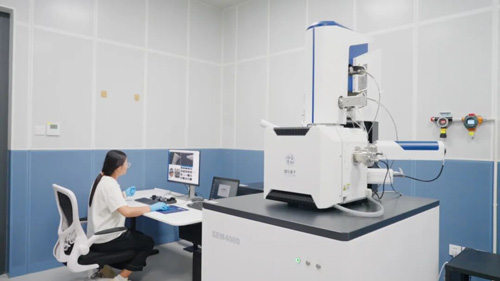
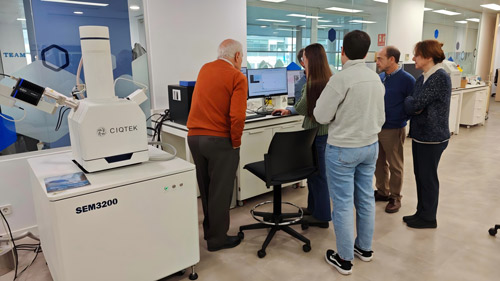
CIQTEK SEM microscope


>> If you’re looking for a cost-effective SEM, contact CIQTEK today to learn how our SEM instruments can support your research and teaching needs.

阅读全文......