Latest Electronics News & Trends | Expert Insights & Innovations

More Than Just a Tag How RFID is Weaving Efficiency into the Fabric of Fashion


The End of the Endless Scan

We've all seen it—a store employee scrambling through a messy backroom, frantically searching for a specific size, or a long queue of customers waiting as a cashier meticulously scans each item's barcode. In today's fast-paced retail world, these scenes are becoming relics of the past, thanks to a tiny, powerful technology: the RFID tag.

From Factory Floor to Fitting Room

So, what is RFID doing for fashion? The journey starts in production, where tags are attached to garments, allowing factories to track them through every step of the manufacturing process with pinpoint accuracy . This means fewer errors and a smoother flow from production line to warehouse.

Once in the distribution center, the real magic of batch-reading shines. An entire roll-cage of clothes can be scanned in seconds as it passes through a gateway, slashing receiving and shipping times . This speed ensures that the latest trends hit the store floor faster.

For store managers and staff, RFID is a game-changer. Imagine completing a store-wide inventory check in minutes, not hours, and with near-perfect accuracy . This frees up staff to focus on what really matters: helping customers. For the shopper, this means the item they want is almost always in stock. It also means lightning-fast self-checkout—simply drop your items in the bin and pay—and interactive fitting rooms that offer smart style recommendations .

A Smarter Foundation for Fashion

RFID is more than just a fancy inventory tool; it's the backbone of a smarter, more responsive, and more sustainable fashion industry. It empowers brands to reduce waste, meet customer demand instantly, and build a transparent supply chain. The next time you effortlessly check out or quickly find your size, remember the tiny tag that made it all possible.


Looking to integrate smart RFID solutions into your fashion business? SeeMore IoT Technologies offers a range of reliable tags and expert consultation to help you begin your digital transformation journey.

阅读全文......

Qualcomm adds UHF RFID to mobile processor

Qualcomm has announced Dragonwing  Q-6690  claimed to be the  first enterprise mobile processor to feature integrated UHF RFID capabilities.


The processor has built-in 5G, Wi-Fi 7, Bluetooth 6.0, and UWB, facilitating advanced proximity-aware experiences and robust global connectivity.

Its architecture supports form factors from ruggedized handhelds to retail POS systems and smart kiosks, providing OEMs and ODMs with a scalable, upgrade-ready platform and software-configurable feature packs for over-the-air updates.


The processor enables edge devices across retail, commercial, and industrial sectors, enabling smarter, proximity-aware interactions through its combination of integrated RFID, AI, and advanced connectivity.


OEMs incuding  Zebra, Honeywell, Urovo, HMD Secure, and CipherLab are  integrating this platform, with commercial devices anticipated soon, validating its market readiness.

Integrating RFID capabilities, eliminates the need for external RFID reader modules enabling smaller, more efficient device designs.

This integration eases the enablement of security-focused, contactless use cases such as access control, asset tracking, inventory management, and product authentication, ideal for retail, logistics, and industrial applications.


The device introduces software-configurable feature packs that let OEMs choose their offerings depending on the computing demands, multimedia capabilities, camera support, or peripheral configurations they need—with the ability to upgrade over the air without redesigning hardware.

This modular approach not only accelerates time to market and reduces certification overhead but also extends product lifecycles by enabling over-the-air upgrades as customer needs evolve.


By David Manners Posted on 27th August 2025 | Modified on 26th August 2025

https://www.electronicsweekly.com/news/business/qualcomm-adds-2025-08/

阅读全文......

Taming Metal Assets Why Your Fixed Asset Management Needs Flexible RFID Tags


If your company's fixed assets include anything from servers and industrial tools to medical carts and metal shelving, you've likely faced the "metal problem" in asset management. Traditional labels fall off, barcodes become unreadable, and standard UHF RFID tags simply fail when placed directly on metal surfaces. This blind spot can turn your asset tracking efforts into a guessing game.

Fortunately, flexible anti-metal RFID tags are specifically engineered to solve this exact challenge.

The Invisible Shield: How Flexible Anti-Metal Tags Work

Unlike standard RFID tags that detune and become unreadable on metal, flexible anti-metal tags incorporate a special protective layer. This layer acts as a barrier, preventing the metal surface from interfering with the tag's antenna. The result is a tag that performs reliably even when directly attached to metal assets.

Their flexibility allows them to conform to curved surfaces like cylinders or machinery housings, ensuring a strong bond and consistent performance. Combined with traditional paper/polyester RFID labels for non-metal items like office furniture and electronics, you can achieve 100% asset coverage.

Three Transformative Benefits for Your Business

  1. Achieve Unprecedented Inventory Accuracy: Imagine completing a full inventory of a server room or a workshop in minutes, not days. With a handheld RFID reader, you can accurately read dozens of tagged metal assets simultaneously without line-of-sight. This boosts inventory accuracy from around 80% to over 99.9%, eliminating costly manual errors and "ghost assets."

  2. Gain Real-Time Visibility into Asset Movement: By installing fixed RFID readers at key doorways and choke points, the system can automatically record the movement of tagged metal assets. Receive instant alerts if high-value equipment leaves an authorized area, drastically reducing loss and enabling true real-time tracking.

  3. Automate the Entire Asset Lifecycle: From procurement and into warehouse to calibration, maintenance, and disposal, every touchpoint can be automatically logged. This data provides an audit trail, ensures timely maintenance, and offers invaluable insights for optimizing asset utilization and financial planning.


The Bottom Line

Flexible anti-metal RFID tags are more than just a technical upgrade; they are the key to unlocking operational efficiency, enhancing security, and making data-driven decisions about your most critical physical assets.

Ready to see what your asset management could be? Contact SeeMore IoT to learn how our high-performance flexible anti-metal tags can bring your metal assets into clear view.

阅读全文......

The Invisible Eye How RFID is Revolutionizing Service Robot Navigation

Picture this: You're in a smart hotel, and you've just ordered room service. A few minutes later, a discreet robotic cart glides silently out of the service elevator, navigates down the corridor, and stops precisely at your door. It doesn't hesitate at intersections. It doesn't get confused by identical-looking hallways. It just arrives.


What you don't see is the invisible infrastructure guiding every move—RFID tags embedded in the ceiling, inside elevator shafts, and above doorways, creating a hidden map that only robots can read.


The Indoor Navigation Challenge

For service robots operating in hotels, hospitals, and office buildings, GPS is useless indoors. While cameras and LiDAR help robots avoid obstacles and map their surroundings, they have fundamental limitations. Cameras fail in low light. LiDAR sees structure but doesn't inherently "understand" location context. In environments with long, repetitive corridors—think hotel hallways or hospital wings—visual navigation alone can lead to cumulative errors and lost robots.


The Infrastructure Approach: RFID from Above

Enter ceiling-mounted RFID infrastructure. Unlike traditional approaches where robots carry RFID readers to scan floor tags, this inverse architecture places the intelligence in the building itself .

Here's how it works:

  • Fixed RFID readers are installed discreetly in ceilings, above doorways, inside elevator shafts, and at key decision points throughout the building

  • Robots carry passive RFID tags that identify them to the infrastructure

  • Each reader covers a defined zone, creating a network of location checkpoints

When a robot passes beneath a ceiling-mounted reader, the reader detects its tag and logs its precise location. This information can be used for real-time tracking, navigation verification, and integration with building management systems.


Elevator Navigation: The Critical Test

The elevator presents one of the toughest challenges for autonomous robots. How does a robot know it's reached the correct floor? How does the system verify successful transit?


This is where RFID infrastructure truly shines. By installing readers at fixed points inside elevator shafts—on the shaft wall at each floor level—the system can detect when a robot-equipped tag passes that point . When the elevator car moves, the reader at each floor reads the robot's tag, confirming floor-by-floor progress with absolute certainty.


Some advanced systems achieve good accuracy for elevator leveling detection, far surpassing traditional mechanical switches . This precision ensures robots exit only at their intended destination—critical for applications like medication delivery in hospitals or room service in hotels.


Beyond Elevators: A Network of Intelligence

The same principle extends throughout the building:

  • Ceiling-mounted readers above doorways confirm when robots enter or exit rooms

  • Readers at corridor intersections verify that robots take correct paths

  • Readers near service areas trigger specific behaviors—like announcing arrival or requesting human assistance

This infrastructure approach offers several advantages over robot-mounted readers:


Feature Ceiling-Mounted Infrastructure Robot-Mounted Reader
Power supply Continuous (building power) Battery-limited
Processing capacity Unlimited (server-based) Constrained
Tag maintenance No robot modifications needed Tags wear with robot
Scalability Add readers for more coverage Add readers per robot
Location precision Zone-based, highly reliable Relative, cumulative error


Real-World Applications

Hospital Logistics
In hospitals, robots transport medications, linens, and lab samples across multiple floors. Ceiling-mounted RFID readers at nursing stations and medication rooms confirm deliveries, while shaft-mounted readers ensure correct floor navigation. This eliminates the risk of critical items reaching the wrong ward .

Hotel Service
Hotels deploying room service robots face the challenge of identical corridors and numerous rooms. Ceiling-mounted readers above each guest room door create unique location fingerprints, guiding robots to the correct door every time.

Smart Buildings
As buildings become smarter, RFID infrastructure enables seamless integration between robots and building systems. When a robot approaches an elevator, the building knows its identity and destination before it arrives, pre-scheduling elevator cars and optimizing traffic flow .


The Future: Buildings That See

We're moving toward an era where buildings actively participate in the services they host. Ceiling-mounted RFID infrastructure transforms passive structures into intelligent environments—spaces that see the robots moving through them and guide their every step.

For facility managers and automation planners, the message is clear: the most reliable robot navigation doesn't depend on smarter robots alone. It depends on smarter buildings.

阅读全文......

Unlock Smarter Operations with Gen2X – The RAIN RFID Protocol Redefined

Beyond Basic Tracking: How Gen2X is Making RAIN RFID Smarter, Faster, and More Secure

Discover how the Gen2X protocol upgrade transforms RAIN RFID. Learn about Impinj Integra data integrity, Tag Quieting, Protected Mode, and how they solve real-world inventory, security, and privacy challenges.


For years, RAIN (UHF) RFID has been the workhorse for asset tracking and inventory management. But as deployments scale and applications demand more intelligence, the foundational Gen2 protocol is reaching its limits. Enter Gen2X—a suite of enhancements that doesn't just improve RFID; it redefines its capabilities.

Why Gen2X Matters: Solving Core Business Challenges

Imagine a world where every tagged item is guaranteed to be readable for its entire lifecycle, where warehouse read points are 100% accurate even when surrounded by hundreds of other tags, and where consumer privacy is seamlessly built into the retail journey. Gen2X makes this possible.

  • Eradicate Bad Tags with Impinj Integra™: Traditional RFID offers no guarantee that a written tag will retain its data. Impinj Integra™ introduces chip-level data integrity. Features like Memory Self-Check and MarginRead automatically validate the health and write-strength of Impinj M700 and M800 series chips. This means you can catch and reject defective or poorly encoded tags before they enter your supply chain, saving immense costs in rework and failed reads.

  • Achieve Flawless Accuracy with Tag Quieting: In a busy loading dock, a reader must distinguish between pallets already on a truck and those still being loaded. Gen2X Tag Quieting allows the reader to temporarily silence counted tags. The result? A dramatic reduction in interference and near-perfect accuracy for dynamic, high-density operations. No more double-counting or missed items.

  • Bridge Retail & Consumer Trust with Protected Mode™: The journey of an RFID tag shouldn't end at checkout. Impinj Protected Mode™ lets retailers "turn off" a tag's public visibility at the point of sale, addressing consumer privacy concerns. For legitimate returns, a secure PIN reactivates the tag for verification, providing a powerful tool against fraud. It's a win-win for security and customer experience.

Smarter Infrastructure, Lower TCO

By enabling longer read ranges, faster inventory speeds, and intelligent tag management, Gen2X allows you to achieve the same—or better—results with fewer readers, less manual intervention, and higher reliability. This translates directly to a lower total cost of ownership (TCO) for your RAIN RFID infrastructure.

The future of RFID is not just about reading more tags; it's about reading them intelligentlyGen2X provides the essential toolbox to build that future today.

Ready to explore Gen2X-enabled solutions? Contact our team to learn how our latest Impinj E710-based readers leverage these features to deliver superior performance.

阅读全文......

Ways RFID Technology is Revolutionizing Jewelry Store Management

For jewelry retailers, inventory accuracy isn't just about efficiency—it's about profitability and security. Traditional manual counting methods are prone to error and leave you vulnerable to loss. Ultra-High Frequency (UHF) RFID technology is changing the game.

Here’s how:

  1. Instantaneous Full Inventory: Conduct a complete store inventory in minutes, not days, with 99.9% accuracy. Say goodbye to lengthy store closures for stocktaking.

  2. Enhanced Loss Prevention: Gain visibility into item movement. Receive alerts if high-value pieces are moved without authorization, deterring both internal and external theft.

  3. Exceptional Customer Service: Locate any item in the back vault or showcase in seconds, allowing you to answer customer inquiries confidently and close sales faster.

  4. Streamlined Operations: Simplify receiving, transferring items between locations, and cycle counts. Reduce labor costs and free up staff for customer-facing tasks.

  5. Improved Authentication: Each RFID tag carries a unique, unalterable identity, adding a layer of security against counterfeits.

By implementing an RFID solution, jewelry stores can transform their inventory from a liability into a strategic, visible asset.

阅读全文......

CIQTEK to Exhibit at 16th ASEM Workshop 2026 in Austria

CIQTEK will attend the 16th Austrian Society for Electron Microscopy (ASEM) Workshop on Advanced Electron Microscopy, taking place on April 20–21, 2026, at the Institute of Science and Technology Austria (ISTA) in KlosterneuburgAustria.

The workshop brings together researchers, engineers, and microscopy experts to explore the latest advancements in electron microscopy technologies, SEM imaging, and scientific applications.


Showcasing CIQTEK Electron Microscopy Solutions

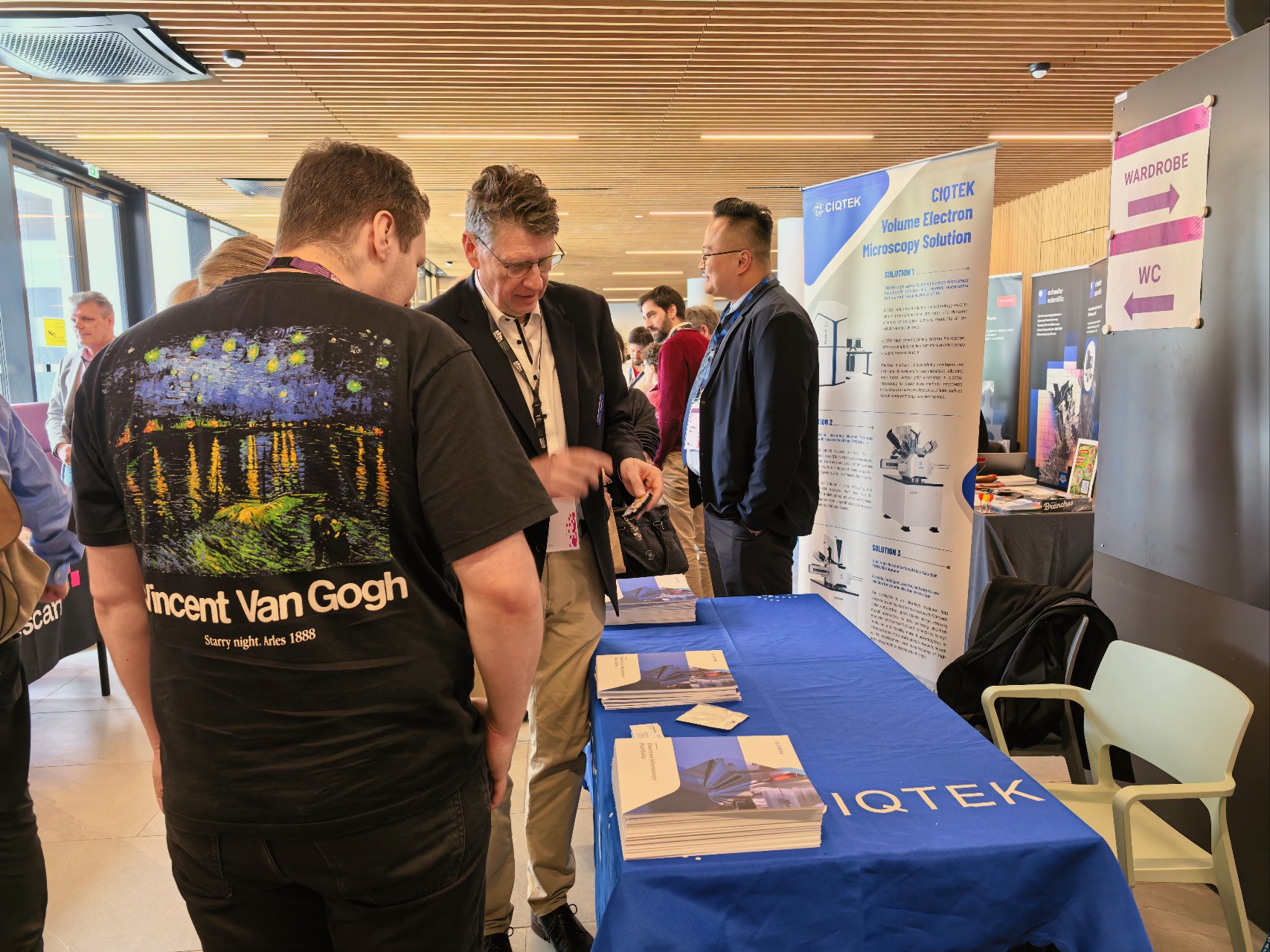
At the event, the CIQTEK Electron Microscopy EU team will introduce its scanning electron microscopy (SEM) and field emission SEM (FE-SEM) systems, highlighting applications in materials science, nanotechnology, semiconductor research, and life sciences. Participants can learn about CIQTEK's high-performance, reliable, and user-friendly electron microscopes designed to meet diverse research needs.

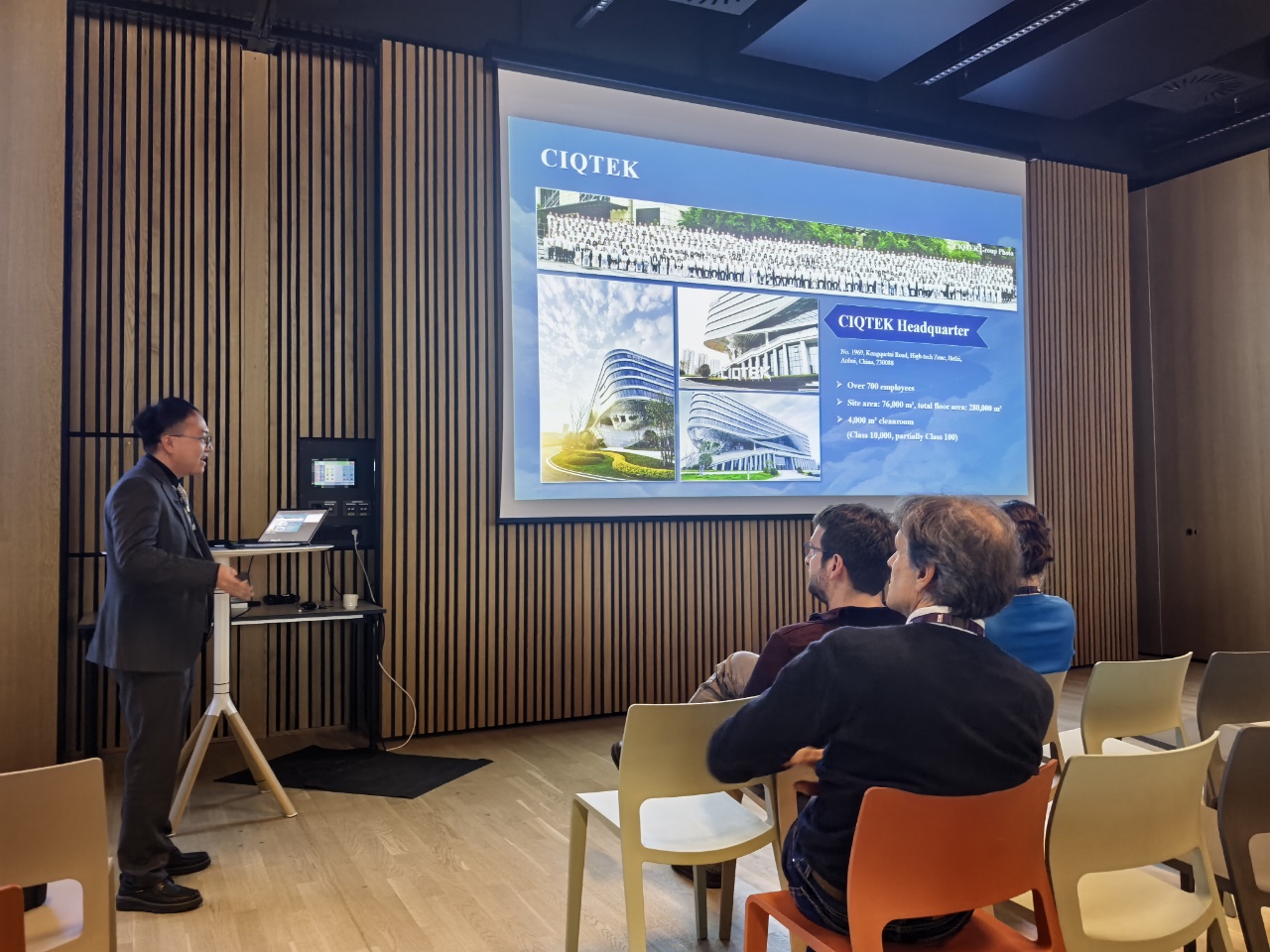
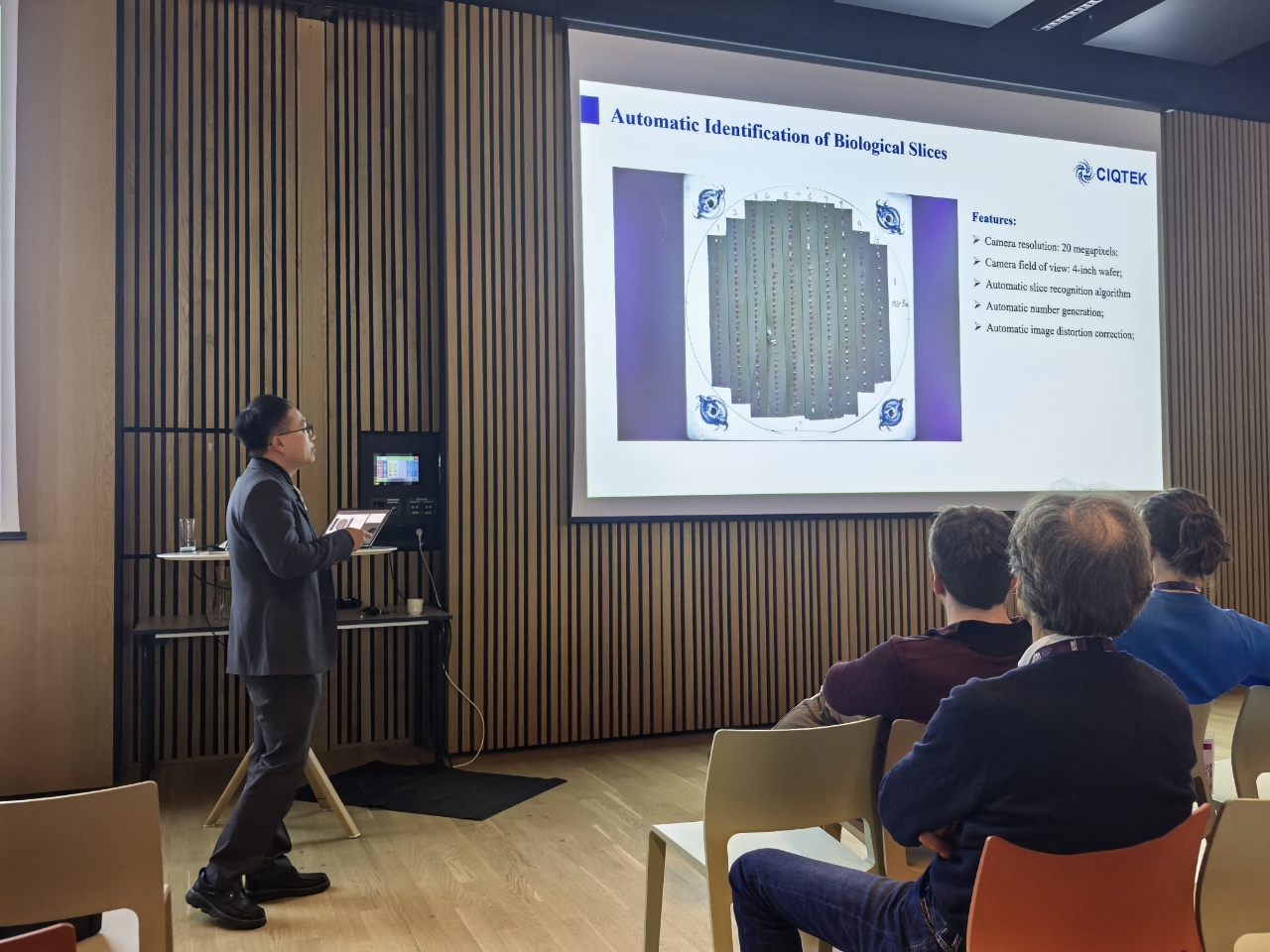
In addition, Dr. Fengfa Yao, senior EM solution scientist from the CIQTEK EU Electron Microscopy team, will deliver a technical presentation titled "Unlocking the Power of Unique High-Speed Scanning Electron Microscopy with No Compromise of Superb Imaging Resolution at Low kV for Large Scale Volume Microscopy Applications from CIQTEK." The talk will introduce CIQTEK's latest advancements in high-speed SEM imaging, demonstrating how researchers can achieve rapid data acquisition while maintaining excellent low-kV imaging resolution, which is critical for large-scale volume microscopy applications.


Dedicated DACH Region Support

To better serve European clients, CIQTEK has established and is expanding its dedicated DACH region (Germany, Austria, Switzerland) Electron Microscopy team, providing localized sales, technical support, and service. This ensures rapid response and tailored solutions for research institutes and laboratories across the region.


Event Information

  • Event: 16th ASEM Workshop on Advanced Electron Microscopy

  • Date: April 20–21, 2026

  • Location: Institute of Science and Technology Austria (ISTA), KlosterneuburgAustria


CIQTEK to Showcase SEM at 16th ASEM Workshop 2026 in Austria

阅读全文......

CIQTEK SEM Joins Münster Electron Microscopy Training Courses 2026 in Germany

CIQTEK is pleased to announce that the CIQTEK SEM3200 tungsten filament scanning electron microscope will take part in the 2026 Münster SEM training courses, providing hands-on instrument experience for participants during the sessions held from March 16 to March 20, 2026 in Münster, Germany.

This collaboration allows researchers, engineers, and microscopy users attending the training program to directly operate the SEM3200 system and explore its capabilities in real-world analytical workflows. For many participants, it will be an opportunity to gain practical experience with modern scanning electron microscope technology during one of Europe’s longest-running microscopy training programs.


About the Münster SEM Training Courses

The SEM training courses in Münster are organized by the Akademie für Elektronenmikroskopie und Analytik gGmbH, a well-established institution dedicated to education in electron microscopy and microanalysis.

For decades, the academy has hosted intensive training sessions covering topics such as:

  • Scanning Electron Microscopy Fundamentals

  • Energy Dispersive Spectroscopy (EDS) analysis

  • Electron imaging techniques

  • Sample preparation and practical workflows

  • Data interpretation for materials analysis

These courses attract a diverse group of participants each year. Attendees include university researchers, laboratory engineers, industrial materials specialists, and microscopy facility staff from across Europe and beyond.

The training takes place at the Fachhochschulzentrum of Münster University of Applied Sciences, where lecture sessions are combined with hands-on laboratory work. Multiple microscopes are installed for the courses so that participants can gain direct operational experience.

The 2026 course schedule includes several specialized sessions, such as:

  • R-1: Introduction to Scanning Electron Microscopy

  • R-2: Advanced SEM and Microanalysis

  • R-3: Advanced SEM Techniques

  • EBSD Analysis Training

  • Particle Analysis Courses

During the sessions from March 16 to March 20, the CIQTEK SEM3200 will be available as one of the instruments used for training and demonstrations.

Check the courses here: http://www.akademie-elektronenmikroskopie.de/uebersicht.php


Supporting Education and Knowledge Sharing in Electron Microscopy

Training programs like the Münster SEM courses play an important role in the electron microscopy community. They provide a platform where researchers and engineers can strengthen their practical skills and exchange experiences with instructors and fellow participants.

CIQTEK believes that hands-on education is essential for advancing scientific research and analytical capabilities. By supporting training initiatives and providing instruments for practical sessions, the company aims to help users gain a deeper familiarity with SEM technology and its applications.

Events like these also create opportunities for dialogue between instrument developers and end users. Feedback from training environments often helps drive improvements in usability, software design, and analytical workflows.


CIQTEK Electron Microscopy Product Portfolio

The SEM3200 is part of CIQTEK's growing portfolio of electron microscopy instruments designed for research laboratories, universities, and industrial analytical facilities.

CIQTEK offers a range of scanning electron microscope solutions, including:

- Tungsten Filament SEM Series

Reliable and cost-effective systems for routine imaging and materials analysis.

- Field Emission SEM Series

High-resolution instruments designed for advanced nanostructure observation and demanding research applications.

- Focused Ion Beam SEM (FIB-SEM)

Dual-beam systems for nanoscale sample preparation, cross-sectioning, and 3D analysis.


Looking Ahead to Münster 2026

The 2026 Münster SEM training courses will once again bring together members of the microscopy community for several weeks of intensive learning and practical experience. CIQTEK is pleased that the SEM3200 scanning electron microscope will contribute to the program and support participants during their hands-on sessions.

By working with training institutions and research organizations, CIQTEK continues to support the development of microscopy expertise and the advancement of materials characterization technologies worldwide.


CIQTEK SEM Joins Münster Electron Microscopy Training Courses 2026 in Germany

阅读全文......

Beyond the Price Tag How Decathlon Uses RFID to Master Inventory Efficiency and Cost Control

In an era of shifting consumer habits, value has taken center stage. Shoppers are increasingly drawn to brands that offer durability and performance without the premium price tag. Few companies embody this shift better than Decathlon. The global sports retailer operates on a famously lean model—controlling everything from product design and manufacturing to logistics. With a strict cap on marketing spending (less than 1% of turnover) and a net margin of just 6.5% in 2022, Decathlon proves that profitability comes from operational excellence, not just cutting corners .

But here is the paradox: How does a company so focused on cost justify investing in technology like RAIN RFID (Radio Frequency Identification), especially a decade ago when tag prices were significantly higher than they are today?

The answer lies in Return on Investment (ROI) . For Decathlon, RFID is not an expense; it is a tool that fuels their low-cost business model. Here is how the world"s largest sports retailer leverages UHF RFID technology to stay lean, efficient, and responsive.

1. Slashing Labor Costs with Automation

The most immediate impact of RFID is the drastic reduction in manual labor. Before RFID, Decathlon relied on employees for time-consuming tasks like stock counting and checkout.

  • Warehouse & Store Efficiency: Manual inventory counts were once a massive operational burden. According to some Retail Operations Director at Decathlon, the company used to spend over 140,000 hours annually on manual inventory counting, with accuracy hovering between 86% and 90% . Now, in a 4,000-square-meter store, an RFID-equipped robot can complete a full inventory scan in just 1.5 hours with 99.2% accuracy .

  • Self-Checkout: RFID-enabled point-of-sale (POS) systems allow customers to scan entire baskets of items instantly. This has led to a 50% reduction in self-checkout time in markets like Brazil, improving the customer experience while allowing staff to focus on sales rather than scanning barcodes .

2. Increasing Supply Chain Velocity and Accuracy

In the fast-moving world of retail apparel and equipment, inventory visibility is critical. By tagging individual items at the source, Decathlon gains real-time data across its global supply chain.

  • Reduced Shrinkage: Real-time tracking helps pinpoint where goods are lost, whether in transit or in-store. Decathlon reports that RFID has helped reduce its product loss (shrinkage) rate by 9% .

  • Enhanced Accuracy: In logistics, RFID has reduced packaging errors at factories from 1.5% to just 0.2%, ensuring that the right product reaches the right store .

3. Agile Response to Consumer Demand

Decathlon is famous for acting as a "dupe" for high-end outdoor gear. When a luxury brand launches a popular jacket and consumers flock to Decathlon for an affordable alternative, the company must act fast to avoid stockouts.

RFID provides the data backbone for this agility. By visualizing sales data in real-time, Decathlon can spot trends instantly. This enables lean manufacturing—quickly ramping up production on winning items to capture maximum revenue. This data-driven approach has contributed to a 5% uplift in sales attributed directly to RFID implementation .

The Bottom Line: Value Over Cost

While some retailers hesitated to adopt RFID due to the price of tags, Decathlon recognized the technology"s ability to unlock value across the entire business. As noted by AIoT Star Map Institute, the apparel and footwear sector used over 27.6 billion RFID tags in 2022, making it the largest market for the technology .

For retail decision-makers wondering if RFID is worth the investment, Decathlon"s decade-long track record provides a clear answer: RFID doesn"t just pay for itself; it becomes the foundation of a leaner, smarter, and more profitable operation.


阅读全文......

The Evolution of Marathon Timing Why Modern Races Can't Live Without RFID Mat Antennas

If you're a runner, you've probably experienced that anxious wait for your official finish time. If you're a race organizer, you've wrestled with accuracy issues and cheating concerns. Let's explore the technology that's changing all that—RFID marathon timing systems.


From Stopwatches to Chips: A Timing Revolution

A decade ago, marathon timing relied on manual stopwatches and video playback. Dozens of volunteers at the finish line still couldn't prevent missed or incorrect records. Barcode scanning came next, but it required runners to actively scan—inefficient and error-prone. It wasn't until UHF RFID technology matured that truly automated timing became possible.

Today, 99% of major marathons worldwide use RFID timing. The core components are carpet antennas laid on the ground and fixed readers positioned alongside. As runners cross the antenna, the chip in their bib is instantly read, generating a timestamp accurate to the millisecond.


The Tech Secrets Behind RFID Mat Antennas

You might wonder: with thousands of runners crossing simultaneously, how does the system tell them apart?

The answer lies in two key technologies: circular polarization and anti-collision algorithms.

Standard linearly polarized antennas require the tag to be aligned for proper reading, but bibs can twist or tilt during a race. Our carpet antennas use circular polarization, ensuring stable signal capture regardless of tag orientation. Combined with anti-collision algorithms capable of processing 400+ tags per second, we achieve over 99.5% read accuracy even in dense packs.

Durability is another challenge. A marathon sees tens of thousands of footsteps, plus support vehicles. Our antennas use an FR4-acrylic-FR4 composite structure, less than 1 cm thick yet able to withstand tons of pressure. PVC encapsulation makes them waterproof and UV-resistant, performing reliably in rain or blazing sun.


Enhanced Runner Experience

For runners, RFID delivers more than accurate times. Real-time split timing lets you monitor your pace; friends and family can track your location via app; official results and digital certificates arrive within seconds of finishing. These experiences are becoming race-day essentials.


Future Trends: From Timing to Data Analytics

Race organizers are now using RFID data for deeper insights: Which sections get congested? Which age groups run fastest? Are aid stations optimally placed? These analytics are optimizing race operations and improving runner safety.

Your next marathon will have RFID mat antennas silently working beneath your feet. Next time you cross the finish line, take a moment to appreciate this tiny marvel transforming the sport.

阅读全文......