In premium commercial projects, lighting is never just “illumination”.
It is:
- Spatial language
- Brand expression
- Architectural detail
- Long-term system investment
A high-end magnetic track lighting system must perform beyond aesthetics—it must deliver engineering reliability, optical precision, and life-cycle value.
This guide helps architects, lighting designers, and project developers evaluate a truly professional-grade magnetic track lighting system.
1. What Makes a Magnetic Track Lighting System “High-End”?
A professional system is not defined by appearance—but by system integrity.
✔ Core Evaluation Framework
| Dimension | What It Means | Why It Matters |
| ⚙ Mechanical Precision | Tight track extrusion tolerance + stable magnetic lock | Prevents loosening & failure over time |
| ⚡ Electrical Safety | Stable low-voltage system (commonly 48V) | Ensures safe long-term commercial operation |
| 💡 Optical Performance | High CRI + controlled beam + low glare | Impacts visual comfort & design quality |
| 🔁 System Flexibility | Modular, reconfigurable lighting units | Supports future layout changes |
👉 High-end lighting is not a product. It is a system architecture.
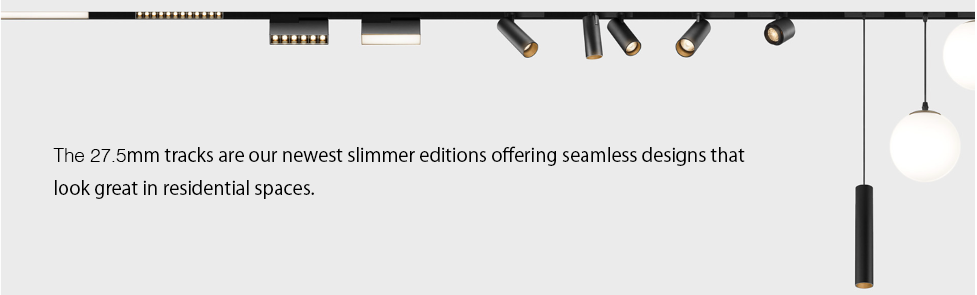
2. Key Technical Standards
Before selecting any system, architects & engineers evaluate the following:
⚡ Electrical System
| Parameter | Recommended Standard | Importance |
| Voltage | 48V low voltage system | Safety + stability |
| Dimming | DALI / 0-10V / TRIAC compatible | Smart control integration |
| Driver Type | Constant voltage / matched system | Prevents flickering & mismatch |
💡 Optical Performance
| Parameter | Premium Standard | Application Impact |
| CRI | ≥ 90 (preferred ≥95) | Accurate color rendering for retail/hospitality |
| Beam Angle | 15° / 24° / 36° / 60° | Smart control integration |
| UGR (Glare) | < 19 recommended | Comfort in office & retail environments |
🧲 Mechanical System
| Feature | Requirement |
| Magnetic Strength | Stable holding under vibration & long-term use |
| Track Material | High-grade aluminum extrusion |
| Contact Design | Anti-oxidation, stable conductivity |
| Installation Tolerance | Precision alignment for seamless ceiling integration |
3. Where Low-End Systems Fail
Most lighting failures in commercial projects are NOT caused by design—but by system quality.
❌ Common Problems
- Flickering after installation
- Loose magnetic connection over time
- Inconsistent brightness between batches
- Driver incompatibility
- Overheating causing lumen drop
⚠ Typical Result in Projects:
Lighting works in samples… but fails after installation in real space.
This is the biggest hidden risk in budget systems.
4. Why Magnetic Track Lighting Is Preferred in High-End Spaces
Modern commercial architecture demands flexibility + minimalism.
✔ Key Advantages
🔄 1. Reconfigurable Design
Lighting modules can be repositioned without rewiring or ceiling damage.
🏛 2. Architectural Integration
Minimal ceiling disruption, clean linear aesthetics.
💰 3. Lower Lifecycle Cost
Commercial lighting cost should be judged over its full lifecycle, not just upfront price.
Traditional systems often lead to higher maintenance, frequent replacements, and expensive reconfiguration when layouts change, increasing long-term cost.
Magnetic track systems reduce maintenance needs and allow quick layout changes without construction work, resulting in lower operating cost and better long-term ROI.
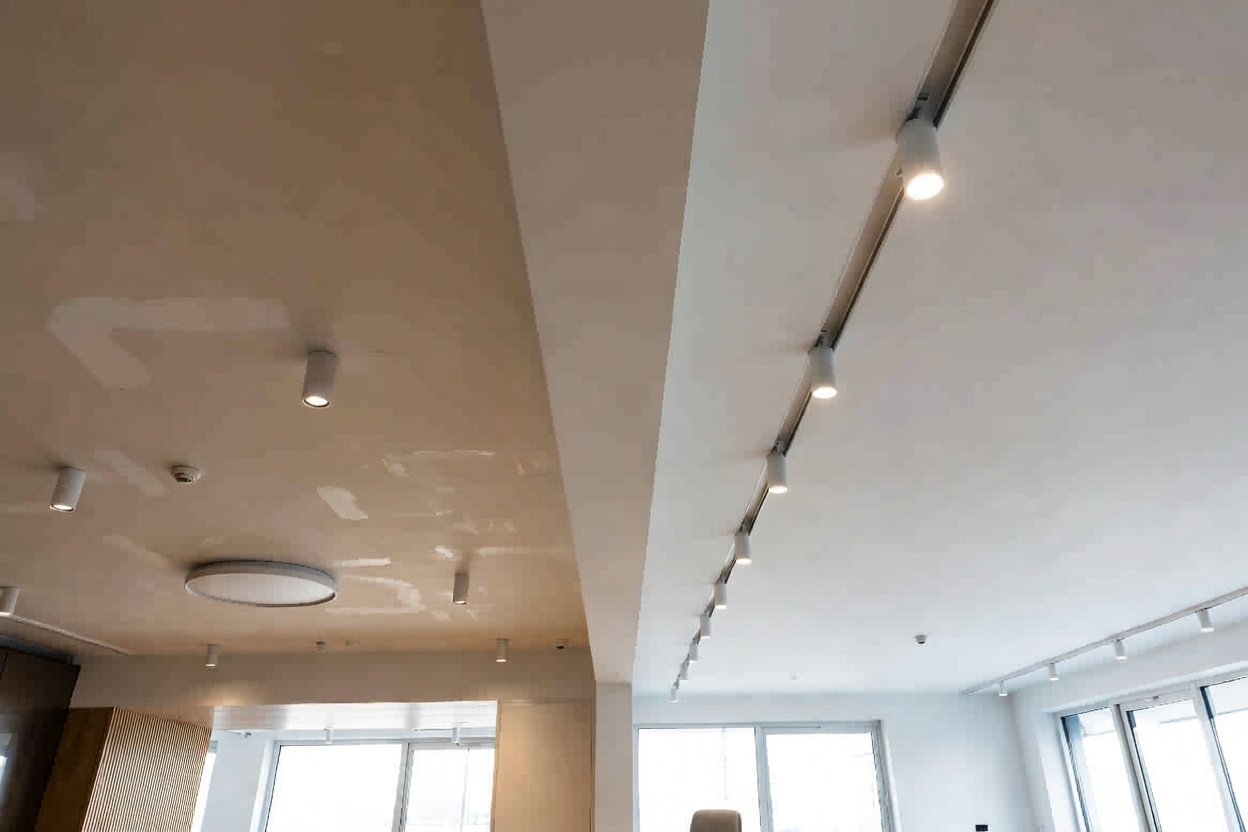
🧠 4. Future-Proof Lighting Strategy
Spaces evolve. Lighting should evolve with them.
5. How Architects Should Specify a Magnetic Track System
A professional specification should NEVER be product-only.
It should be system-based:
✔ Specification Checklist
Electrical
- Voltage system (48V recommended)
- Driver compatibility (DALI / TRIAC / 0-10V)
- Load balancing per track meter
Optical
- CRI ≥ 90 (premium requirement)
- Beam control based on zoning
- Anti-glare requirement (UGR < 19)
Mechanical
- Track type (recessed / surface / suspended)
- Module interchangeability
- Magnetic retention force standard
6. System-Level Thinking vs Product-Level Thinking
Product-Level Thinking “Which lamp is cheaper?” “Does it look good?” “What is the unit price?”
System-Level Thinking “Will the system fail in 3 years?” “Can it support future redesign?” “What is the lifecycle cost?”
👉 High-end projects always choose systems, not components.
7. Total Cost of Ownership (TCO) Perspective
High-end magnetic track lighting is not about initial cost.
It is about long-term efficiency.
📊 Cost Impact Factors
- Maintenance frequency
- Driver replacement rate
- Lighting redesign cost
- Downtime in commercial spaces
- Energy efficiency performance
👉 In premium retail or hospitality environments:
Lighting failure = direct brand experience damage.
8. What Defines a Reliable Manufacturer?
For high-end projects, supplier capability is as important as product quality.
🏭 Stable manufacturing capability
🔬 Strict quality testing system
🧩 OEM/ODM customization ability
📐 Engineering & lighting design support
🏨 Proven commercial project experience

A high-end magnetic track lighting system is not just a lighting choice.
It is:
- A design tool
- A technical system
- A long-term investment
- A part of architecture itself
For architects and project developers, the right decision is not the cheapest option—but the most reliable system that protects design intent over time.