Latest Electronics News & Trends | Expert Insights & Innovations
Thermal PTZ Cameras

Mistakes to Avoid When Choosing a Thermal PTZ Camera

Choosing the wrong thermal ptz camera can expose your property to gaps in security. Many buyers miss critical details like thermal imaging resolution, ignore the build quality, or select features that do not fit their needs. You must understand technical factors such as sensitivity and environmental resistance.

Paying attention to these essentials helps you avoid costly errors and ensures your thermal security camera delivers reliable performance.


Key Takeaways

  • Always check the resolution and pixel count of thermal PTZ cameras. Higher resolution leads to clearer images and better detection.

  • Consider the sensitivity (NETD) and temperature range of the camera. Lower NETD values improve detection of small temperature differences.

  • Evaluate the build quality and IP ratings. A robust camera with a high IP rating ensures durability and reliable performance in harsh conditions.

  • Define your application needs before choosing a camera. Different uses, like security or wildlife monitoring, require specific features.

  • Prioritize ongoing maintenance and manufacturer support. Regular upkeep and good customer service enhance the longevity and effectiveness of your thermal camera.


Overlooking Thermal PTZ Camera Specs

Ignoring Resolution and Pixel Count

You must pay close attention to resolution and pixel count when selecting a thermal ptz camera. Higher resolution means more pixels, which leads to greater detail in thermal imaging. This detail is essential for accurate detection and analysis. For example, increasing resolution from 384×288 to 640×512 more than doubles the pixel count. The area each pixel covers decreases, so you gain sharper images and improved accuracy.

Resolution Change

Pixel Count Increase

Observation Area per Pixel Decrease

384×288 to 640×512

>100%

Proportional decrease

High resolution allows you to measure more temperature points, which enhances detailed analysis in security and industrial applications.


Missing Sensitivity (NETD) and Temperature Range

Sensitivity, measured by NETD (Noise Equivalent Temperature Difference), determines how well your thermal security camera detects small temperature differences. A lower NETD value means higher sensitivity, so you can spot minute temperature variations. This feature improves image clarity and detection, especially in challenging weather.

  • NETD measures the smallest temperature difference your camera can detect.

  • Lower NETD values boost sensitivity and detection capabilities.

  • Enhanced sensitivity leads to clearer thermal imaging and better accuracy.

Temperature range also matters. You need a camera that operates reliably in your environment. Outdoor models often work from -40°F to 140°F, while some can handle up to 158°F for desert use.


Environment

Temperature Range

Outdoor PTZ Cameras

-40°F to 140°F (-40°C to 60°C)

PTZ IP Camera Outdoor models

Up to 158°F (70°C) for desert deployments


Neglecting Refresh Rate

Refresh rate affects how smoothly your thermal imaging updates. If you choose a camera with a low refresh rate, you may miss fast-moving objects or changes. Most security applications require at least 30 Hz for smooth monitoring. Emergency responders report that 60 Hz is useful in high-mobility situations, but 30 Hz works well for most needs.

  • A 9 Hz refresh rate is acceptable for measuring static temperatures.

  • 30 Hz is the minimum for general surveillance.

  • 60 Hz provides extra clarity in dynamic environments.

Always match camera specs and features to your detection needs for reliable performance.


Ignoring Build Quality and IP Ratings
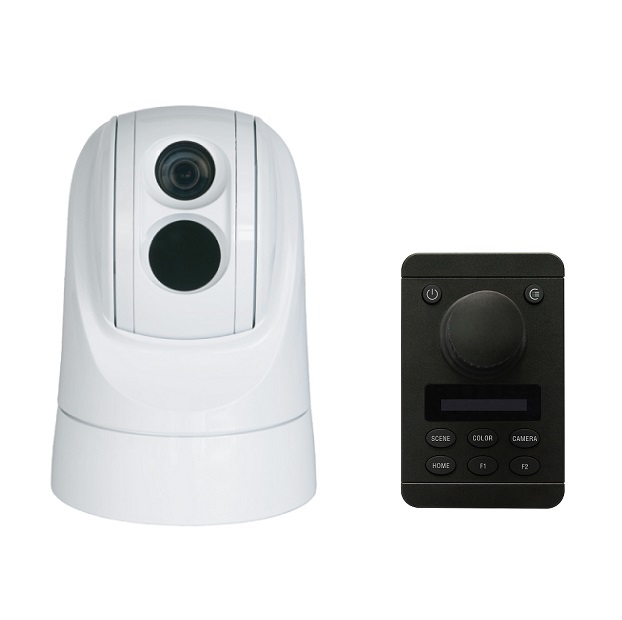
dual payload thermal ptz camrea

Underestimating Robust Construction

You should never overlook the build quality of a thermal imaging PTZ camera. Strong construction protects your investment and ensures reliable operation in tough environments. Manufacturers use materials like aluminum alloy for the housing, which resists corrosion and shields internal components. High-efficiency optical glass improves image clarity and withstands impacts. Built-in heating and heat dissipation features help the camera maintain performance during extreme temperatures. Precision engineering in pan and tilt mechanisms keeps images stable and reduces vibrations.

Feature

Description

Housing

Integral aluminum alloy housing, sealed and waterproof

Window Glass

4mm microcrystalline infrared high-efficiency transparent HLIN optical glass, transmittance > 98%

Temperature Control

Thermal balance design with built-in heating and heat dissipation components for extreme temperatures

Weather Proof

IP66 rating, ensuring water-proof and dust-proof capabilities

Mechanical Design

High-quality materials in pan and tilt mechanisms for image stability

  • Sturdy base and smooth-moving parts improve image stability.

  • High-quality materials in pan and tilt mechanisms reduce vibrations.

  • Precision engineering ensures smooth movement, preventing image distortion.

A robust camera stands up to dust, moisture, and impacts, making it a smart choice for long-term security.


Skipping Ingress Protection (IP) Ratings

You must pay attention to IP ratings when choosing a thermal PTZ camera. The IP rating shows how well the camera resists dust and water. Higher ratings mean better protection and longer lifespan in harsh conditions.

For outdoor security cameras, an IP rating of IP66 or above is considered ideal. To meet the demands of extended water submersion, a higher IP rating like IP67 or IP68 would be more suitable.

The IP weatherproof rating directly affects how long your camera lasts in exposed locations. IP66 cameras resist high-pressure water jets and dust. IP67 models survive temporary water immersion. IP68 cameras handle prolonged rain and harsh environments, making them suitable for coastal or marine installations.

  • IP66: Fully dust-tight and resistant to high-pressure water jets.

  • IP67: Survives temporary submersion up to 1m for 30 minutes.

  • IP68: Suitable for prolonged rain and harsh conditions.

Choosing a camera with the right IP rating ensures your thermal device performs reliably and protects your security system from environmental threats.


Mismatching Camera to Security Needs

Not Defining Application (Security, Industrial, Wildlife)

You need to define your application before choosing a thermal ptz camera. Security, industrial, and wildlife monitoring each demand unique capabilities. If you select a camera without considering your environment, you risk poor performance and wasted investment. Security applications often require long-range detection and high-resolution thermal imaging for accurate threat identification. Industrial sites benefit from cameras that withstand extreme temperatures and weather. Wildlife monitoring needs specialized coatings to protect lenses and high-definition images in low-visibility conditions.

Tip: Write down your main purpose—such as perimeter security, equipment monitoring, or wildlife observation—before you start comparing models.


Overlooking Feature Alignment

You must align the features of your thermal security camera with your specific needs. Not every camera suits every situation. For border monitoring, you need long-range detection—up to 40 km for vehicles and 20 km for humans. High-resolution thermal sensors provide clear imaging in all weather, which is crucial for accuracy. Weather-proof designs ensure reliability in harsh environments.

Feature

Description

Long Range Detection

Up to 40 km for vehicle detection and 20 km for human detection, ideal for border monitoring.

High-Resolution Thermal Sensor

Provides clear imaging in all weather conditions, crucial for security applications.

Weather-Proof Design

Built to withstand extreme weather, ensuring reliability in various environments.

  • Integrated systems enhance overall security capabilities.

  • Advanced analytics improve surveillance efficiency.

  • Automated analysis boosts accuracy and reduces manual monitoring.

If you overlook feature alignment, you may end up with a camera that cannot deliver the performance you expect. Always match the features to your application for the best results.


Overlooking Image Quality in Thermal Imaging

Disregarding Lens and Optics

You should never underestimate the impact of lens quality on a thermal imaging camera. The lens and optics determine how much detail you see and how far you can detect objects. High-resolution lenses give you clearer images and help you identify targets more accurately. Smaller pixel sizes, such as 12μm compared to 17μm, increase resolution and let you recognize distant objects with greater accuracy. Longer focal lengths allow you to zoom in on faraway subjects, but they also narrow your field of view.

  • Higher resolution lenses improve image clarity and target identification.

  • Smaller pixel sizes enhance resolution and help you spot distant objects.

  • Longer focal lengths let you zoom in, which is useful for long-range monitoring.

Tip: Choose a lens that matches your monitoring needs. If you need to observe large areas, select a wider field of view. For distant targets, prioritize longer focal lengths and higher resolution.


Ignoring Image Processing and Frame Rate

Image processing plays a major role in the performance of your thermal imaging camera. Advanced image processing techniques, such as local contrast enhancement, help you distinguish objects from their backgrounds, even when temperature differences are small. Video analytics can provide automatic alerts and improve your situational awareness, making your security system more efficient.

  • Local contrast enhancement improves object detection in challenging conditions.

  • Video analytics reduce false alarms and trigger security responses automatically.

  • High-quality analytics help you respond quickly and accurately to threats.

Frame rate is another critical factor. For smooth video output, you need a frame rate of at least 60 frames per second. This high frame rate helps you track fast-moving subjects and reduces motion blur. It also ensures you capture clear evidence during rapid movements or in difficult lighting.

For the best results in security and monitoring, always check the image processing features and make sure your camera supports a fast frame rate. This combination will boost your accuracy and give you reliable thermal imaging.


Forgetting Environmental Factors

Not Considering Weather Resistance

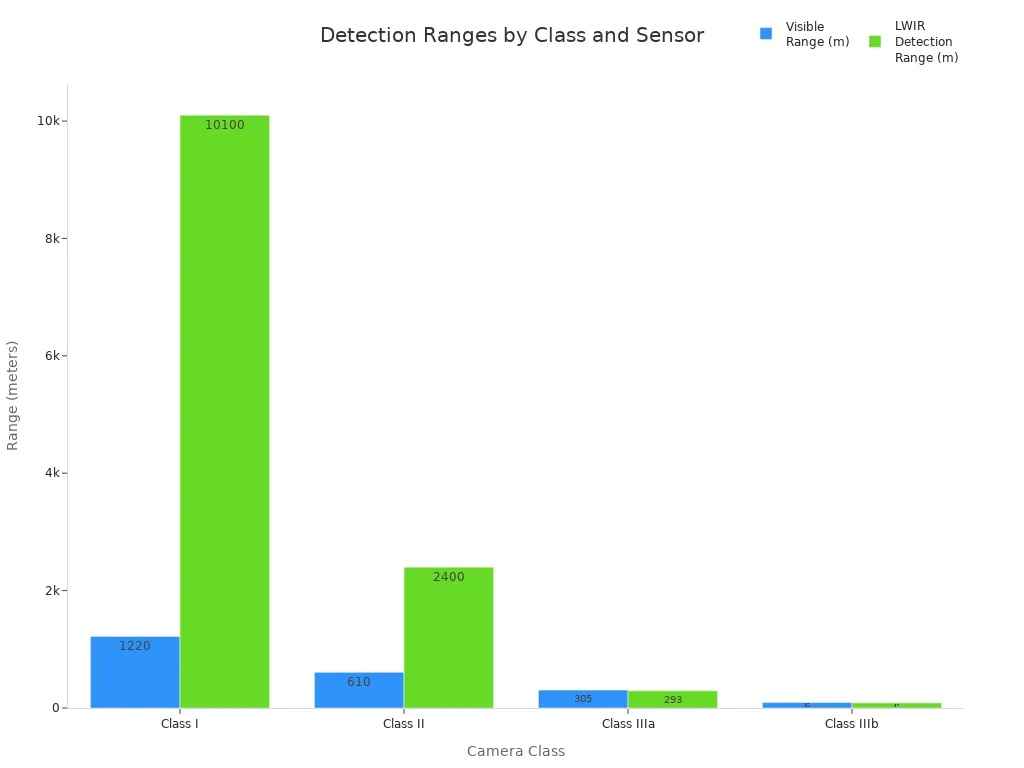
You must evaluate how weather conditions impact the performance of your thermal PTZ camera. Rain, fog, and snow can reduce image quality and make it harder to distinguish objects. Rain causes less scattering than fog, but it still lowers background contrast. Wet snow acts like rain, while dry snow behaves more like fog, increasing scattering and making detection difficult. If you ignore these factors, your security solutions may fail during critical moments.

The detection range changes depending on weather conditions. The table below shows how visible and long-wave infrared (LWIR) detection ranges vary across different camera classes:


Class

Visible Range

LWIR Detection Range

I

1220 m / 4000 ft

5.9–10.1 km / 19,000–33,000 ft

II

610 m / 2000 ft

2.4 km / 7800 ft

IIIa

305 m / 1000 ft

293 m / 960 ft

IIIb

92 m / 300 ft

87 m / 280 ft


Weather resistance is essential for reliable thermal imaging and monitoring. You need to choose a camera that maintains accuracy in rain, fog, and snow.


Ignoring Temperature Extremes

You should also consider the temperature limits your camera can withstand. Outdoor environments often expose devices to extreme heat or cold. Some advanced models, like the HiTemp ETX Series, operate at temperatures up to 150°C. This high tolerance comes from thermoelectric materials that improve cooling capacity by 10% compared to traditional coolers. Most outdoor cameras function reliably up to 90°C, which covers typical security applications.

If you overlook temperature extremes, you risk performance degradation and increased maintenance needs. Always check the specifications to ensure your camera suits your monitoring environment. Selecting the right model protects your investment and guarantees consistent security.


Underestimating Maintenance and Support

Overlooking Installation and Upkeep

You might focus on features and image quality, but you should not ignore the importance of installation and regular maintenance. A thermal PTZ camera needs proper setup to deliver reliable protection. If you skip routine upkeep, you risk losing accuracy and reducing the lifespan of your security solutions.

Regular maintenance keeps your thermal imaging system working at its best. You should check for physical damage, clean the lens, and test camera functions often. Inspecting cables and weatherproof seals helps prevent failures during harsh weather or temperature changes. The table below shows a simple schedule for keeping your camera in top condition:

Frequency

Maintenance Tasks

Daily/Weekly

- Check for physical damage to camera body and housing
- Clean lens with microfiber cloth
- Verify battery levels and confirm recording status
- Test basic camera functions and check motion detection

Monthly

- Inspect camera housing for cracks and check weatherproof seals
- Inspect all cables for wear and ensure connections are secure
- Perform comprehensive PTZ testing and verify field of view

Quarterly

- Check for and install latest firmware updates
- Test backup power systems and inspect power supply connections

Annual

- Full system performance evaluation and network security assessment
- Professional cleaning services and hardware inspection
- Apply fresh waterproof seals and lubricate mechanical components

Tip: Following a regular maintenance plan helps you avoid unexpected breakdowns and ensures your security system provides reliable protection year-round.


Ignoring Manufacturer Support

You should always consider the level of support offered by the manufacturer. Good support makes a big difference when you need help with installation, troubleshooting, or firmware updates. Some brands offer detailed guides, responsive customer service, and easy access to replacement parts. Others may leave you searching for answers when problems arise.

Reliable manufacturer support ensures your thermal camera stays up-to-date and performs well in all conditions. It also helps you handle issues related to temperature extremes or technical malfunctions. When you choose a camera, look for a company with a strong reputation for customer care and technical assistance. This choice gives you peace of mind and keeps your security running smoothly.

Note: Manufacturer support is a key part of long-term protection and accuracy in thermal imaging systems.


Focusing Only on Price

Sacrificing Key Features

You might feel tempted to select a rugged thermal PTZ camera based only on price. This decision often leads to sacrificing essential features that impact your security and protection. Lower-priced models usually limit resolution, which reduces detail recognition and measurement accuracy. You may also encounter temperature range restrictions, with budget cameras often capped between 150°C and 400°C. These limits can prevent you from using the camera for demanding industrial applications.

Advanced features, such as trend analysis tools and robust measurement functions, are frequently missing in cheaper models. You may notice basic thermal imaging capabilities but lack the ability to perform detailed analysis. Build quality also suffers. Cameras with lower IP ratings and less durable construction struggle in harsh environments, which affects the reliability of your security solutions.

  • Resolution constraints reduce detail and accuracy.

  • Temperature range restrictions limit industrial use.

  • Lack of advanced features hinders analysis.

  • Lower build quality impacts durability and protection.

Tip: Always compare features before making a purchase. A camera with strong build quality and advanced features will provide better long-term security.


Ignoring Total Cost of Ownership

Focusing only on the initial price can cause you to overlook the total cost of ownership. You may face issues with certification, which can lead to legal and safety compliance problems. Incorrect installation increases the risk of equipment failure and safety hazards. Budget models often make it difficult to source replacement parts or firmware updates, which complicates maintenance and reduces reliability.

You might regret choosing uncertified alternatives if your camera fails inspections. The table below shows common risks associated with low-cost thermal cameras:

Risk

Impact

Certification issues

Legal and safety compliance problems

Incorrect installation

Equipment failure, safety hazards

Replacement part difficulty

Complicates maintenance, reduces reliability

Uncertified alternatives

May not pass inspections

Note: Consider the long-term costs, including maintenance, support, and upgrades. Investing in a quality thermal imaging camera ensures reliable security solutions and consistent protection.

You can avoid costly mistakes by carefully matching your thermal ptz camera to your surveillance needs. Always consider factors like mounting height, field of view, and temperature range to ensure your thermal security camera performs well in darkness. Use a checklist to compare features such as resolution, lens, and integration.

Consulting experts helps you make informed decisions and ensures your thermal imaging system delivers reliable security, even in total darkness.

  • Review installation plans to prevent blind spots.

  • Prioritize operational use cases over just camera specs.

  • Invest in ongoing surveillance excellence for long-term value.


FAQ

What makes a thermal ptz camera ideal for 24/7 surveillance?

You get reliable protection with a thermal ptz camera. It provides visibility in darkness and complete darkness. The camera uses advanced features for improved detection. You can trust it for 24/7 surveillance in high-security environments and for monitoring critical infrastructure.

Why is calibration important for thermal cameras in high-security environments?

Calibration ensures accurate readings. You need proper calibration for reliable performance. High-security environments demand solutions that deliver accurate readings in complete darkness. Regular calibration helps you maintain the effectiveness of your security system.

How does proper calibration improve monitoring in complete darkness?

Proper calibration gives you accurate readings. You achieve improved detection and reliable performance. In complete darkness, calibration allows your thermal camera to deliver solutions that support custom security solution needs and high-security environments.

What features should you look for to ensure reliable protection in complete darkness?

You should check for advanced features like automatic calibration, high sensitivity, and robust construction. These features help you get accurate readings and solutions for high-security environments. They also support monitoring and security in complete darkness.

Can thermal cameras provide solutions for monitoring critical infrastructure in complete darkness?

Yes, thermal cameras offer solutions for monitoring critical infrastructure. They deliver accurate readings and reliable protection in complete darkness. You can use them in high-security environments where visibility in darkness is essential for security and monitoring.
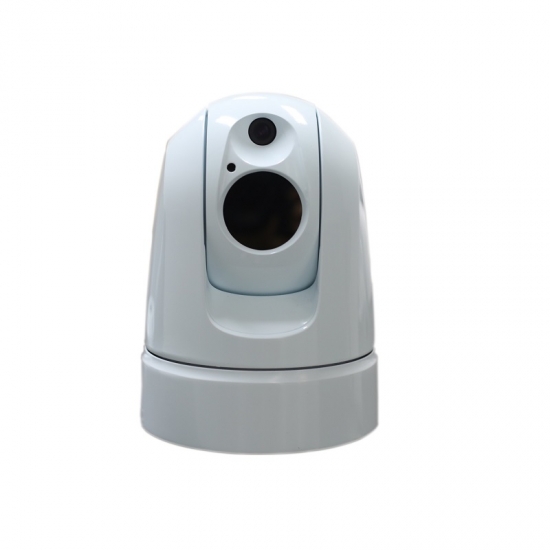
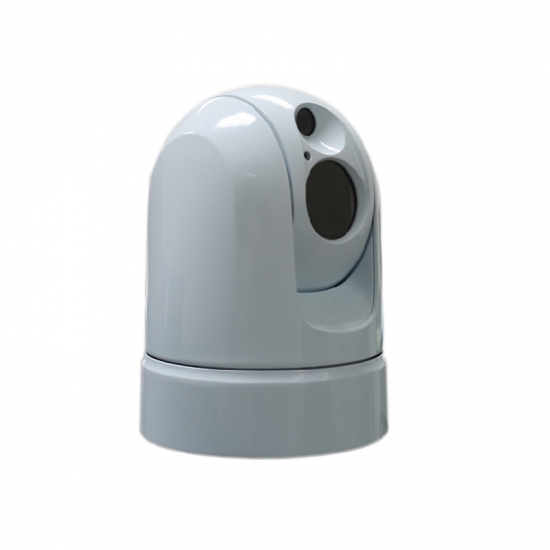
阅读全文......

Pros and cons of using thermal PTZ cameras for surveillance

You will find a thermal PTZ camera can serve as a powerful tool for surveillance in challenging environments. These cameras help you detect hidden threats, avoid glare or shadows, and offer customizable alarms that support quick response. You benefit from energy efficiency and seamless integration with larger security systems. However, you must consider potential blind spots, since these cameras only capture what they focus on at any moment. Assess your site and requirements carefully to balance these strengths and limitations.


Key Takeaways

  • Thermal PTZ cameras excel in low-light and harsh weather conditions, providing reliable surveillance when traditional cameras fail.

  • These cameras offer advanced features like pan-tilt-zoom control and heat signature detection, enhancing monitoring capabilities across large areas.

  • While thermal PTZ cameras reduce false alarms by focusing on heat rather than motion, they may struggle with fine detail identification.

  • Consider the higher initial costs and potential integration challenges when choosing thermal PTZ cameras for your security needs.

  • Combining thermal PTZ cameras with fixed cameras can minimize blind spots and ensure comprehensive coverage.


What is a Thermal PTZ Camera?

Key Features

A thermal PTZ camera combines advanced technologies to deliver versatile surveillance capabilities. At its core, it includes pan-tilt control, which lets you rotate the camera 360° horizontally and tilt it vertically from -90° to +90°. This flexibility allows you to monitor wide areas without blind spots. The camera also features high-precision zoom, enabling you to focus on distant objects with clarity. Thermal imaging technology plays a crucial role by detecting heat signatures, making the camera effective in total darkness or harsh weather. Many models include intelligent functions like automatic tracking and alarm systems, which help you respond quickly to potential threats.

Here is a quick overview of the main components:

  • Pan-Tilt Control: Enables comprehensive horizontal and vertical movement.

  • Zoom Capabilities: Offers dual-spectrum zoom for both visible light and thermal imaging.

  • Thermal Imaging Technology: Uses sensitive detectors to capture heat patterns.

  • Intelligent Features: Includes automatic tracking and alarms for enhanced security.


How Thermal Imaging Works

Thermal imaging detects infrared radiation, a form of heat emitted by all objects. Unlike traditional cameras that rely on visible light, thermal cameras convert this infrared energy into visual images. These images display temperature differences, allowing you to see heat patterns even in complete darkness or through smoke and fog. This ability makes thermal imaging invaluable for surveillance, as it reveals hidden objects or people based on their heat signatures rather than relying on ambient light.

 Thermal Imaging HD SDI PTZ Cameras

PTZ Functionality

The pan-tilt-zoom (PTZ) feature significantly improves your surveillance coverage and flexibility. You can pan the camera to scan large areas horizontally, tilt it to adjust vertical viewing angles, and zoom in to examine details closely. This real-time control helps you track moving targets effectively and respond to dynamic situations. PTZ systems often integrate with intelligent video analytics, improving identification accuracy. When combined with thermal imaging, PTZ cameras provide reliable monitoring in environments where traditional cameras might fail.

Note: Some thermal PTZ cameras offer dual imaging capabilities, combining visible light and thermal sensors. This feature gives you the best of both worlds—clear visual details and heat-based detection.


Thermal PTZ Camera Advantages

Night Vision and Low-Light Performance

Thermal PTZ cameras excel in night vision and low-light surveillance. Unlike traditional security cameras that depend on ambient light, these cameras use infrared technology to detect heat signatures. This capability allows you to monitor areas in complete darkness, fog, or smoke without losing clarity. You can identify intruders hiding in shadows or dense foliage, which visible-light cameras often miss. The infrared thermal imaging technology works independently of light sources, making it ideal for long-range and extreme environment surveillance.

Key benefits include:

  • Operates effectively day and night without additional lighting.

  • Detects body heat, revealing hidden threats in total darkness.

  • Provides high-contrast images that enhance video analytics and target recognition.


Extreme Weather Reliability

Thermal PTZ cameras maintain performance in harsh weather conditions where standard cameras struggle. They rely on infrared radiation to create images, allowing you to see through fog, smoke, rain, and dust. This makes them invaluable for outdoor surveillance in unpredictable climates. Additionally, these cameras often feature rugged designs with high durability ratings, enabling them to function reliably across wide temperature ranges. You can trust these devices to deliver consistent monitoring even in extreme cold or heat.

Advantages include:

  • Infrared imaging penetrates obscurants that block visible light.

  • Durable construction withstands severe environmental conditions.

  • Reliable operation ensures continuous security coverage regardless of weather.


Heat Signature Detection

One of the most significant benefits of ptz cameras with thermal imaging lies in their ability to detect heat signatures at impressive distances. This feature allows you to spot humans, animals, and vehicles based on their emitted infrared radiation. For example, industrial-grade thermal imaging cameras can detect targets hundreds of meters to several kilometers away. Some advanced models, like Raythink’s PC4 dual-spectrum thermal ptz camera, identify humans at 4.2 kilometers and vehicles at 12.8 kilometers. This long-range detection capability supports perimeter defense and early threat identification.

Device Type

Typical Detection Range

Applications

Consumer-Grade Thermal Camera

Tens to hundreds of meters

Home inspections, appliance diagnostics, outdoor exploration

Industrial-Grade Thermal Imaging Camera

Hundreds of meters to tens of kilometers

Perimeter security, forest fire prevention, wildlife research


Dual Imaging Versatility

Many thermal PTZ cameras combine infrared and visible-light sensors, offering dual imaging capabilities. This combination provides you with the benefits of both thermal detection and clear visual details. You can switch between thermal and optical views or overlay them for enhanced situational awareness. This versatility improves identification accuracy and helps confirm threats before triggering alarms. Dual imaging also supports better evidence collection, as you capture both heat signatures and recognizable images.

Benefits of dual imaging include:

  • Enhanced target verification through combined thermal and visual data.

  • Improved situational awareness in diverse lighting conditions.

  • Greater flexibility for various surveillance scenarios.


Reduced False Alarms

Thermal PTZ cameras help reduce false alarms significantly compared to conventional security cameras. They detect heat signatures rather than relying on motion or light changes, which often trigger false alerts. Thermal imaging ignores irrelevant stimuli such as shadows, reflections, or moving foliage. Combining thermal cameras with radar or intelligent analytics further increases detection accuracy and lowers false alarm rates. This reduction saves time and resources by focusing your attention on real threats.

Source

Evidence

FLIR

Combining thermal cameras with radar increases detection probability and reduces false alarms.

Sunell Security

Thermal imaging ignores non-threatening stimuli like shadows and reflections, leading to lower false alarm rates.

Hillary Kiprono’s Post

Thermal signatures confirm the presence of real threats, reducing false alarms.

Note: While thermal PTZ cameras offer many benefits, keep in mind the downside of potential blind spots during pan-tilt-zoom movements. Careful system design can mitigate this issue.


Thermal PTZ Camera Disadvantages

High Cost

You will notice that the initial investment for a thermal PTZ camera is significantly higher than for standard surveillance equipment. The advanced sensors, rugged construction, and intelligent features drive up the price. You must also consider ongoing costs, such as specialized maintenance and potential software updates. For many organizations, this high cost can become a barrier, especially when deploying multiple units across a large site.

  • Upfront purchase price exceeds that of visible-light cameras.

  • Maintenance and calibration require specialized skills.

  • Budget constraints may limit the number of cameras you can install.


Limited Detail and Identification

Thermal imaging technology excels at detecting heat signatures, but it cannot capture fine details. You will find it difficult to identify specific features, such as a person’s clothing color or a vehicle’s license plate. This limitation can hinder investigations that require positive identification.

  • Visible-light cameras allow you to recognize clothing color and vehicle make, which is essential for detailed identification.

  • Thermal cameras help you detect shapes and potential threats in challenging conditions, but they struggle with individual identification.

  • For tasks that demand performance in low-light or adverse weather, thermal imaging reduces false alarms but sacrifices detail.


Blind Spots from PTZ Movement

A primary downside of ptz cameras is the potential for blind spots during operation. When you pan, tilt, or zoom the camera to focus on a specific area, other regions remain unmonitored. This creates windows of vulnerability that intruders can exploit.

  • Wide-area monitoring becomes challenging, as the camera only observes one direction at a time.

  • Fixed cameras often leave blind spots in large spaces, but ptz camera models can miss activity while repositioning.

  • Tracking moving targets in complex environments can be difficult, leading to target loss.

Tip: You can reduce blind spots by integrating thermal PTZ cameras with fixed cameras for comprehensive coverage.


Material Limitations (Water, Glass)

Thermal imaging cannot penetrate certain materials, which impacts surveillance effectiveness. You will encounter issues when monitoring through glass or water, as these substances block or distort infrared radiation.

Limitation

Description

Cannot see through glass

Glass reflects and absorbs long-wave infrared (LWIR) radiation.

Obscured by water

Water can obscure thermal signatures, hindering detection.

You should avoid placing thermal PTZ cameras behind windows or in areas where water may obstruct the field of view.


Integration Challenges

Integrating a thermal PTZ camera into an existing security system can present challenges. Compatibility issues may arise with legacy hardware or software platforms. You may need to invest in additional infrastructure or specialized training for your team.

  • Integration with older systems may require custom solutions.

  • Staff must learn to interpret thermal images and manage advanced features.

  • Upgrades and ongoing support can increase operational complexity.

Note: Careful planning and consultation with experienced professionals can help you overcome these integration challenges.


Comparison with Traditional Cameras

Visual vs. Thermal Imaging

You will notice that thermal PTZ cameras differ significantly from traditional visible-light security cameras. Thermal cameras detect heat radiation, allowing you to monitor areas regardless of lighting conditions. They function independently of visible light, so you can rely on them during nighttime or in complete darkness without additional illumination. Traditional cameras depend on ambient light or artificial sources, which limits their effectiveness in low-light or no-light environments. While visible-light cameras capture detailed images with colors and textures, thermal cameras focus on temperature differences, which helps you detect hidden threats early rather than just collecting evidence after an incident.


Performance in Different Conditions

Thermal PTZ cameras outperform traditional cameras in challenging weather and environmental conditions. Fog, smoke, light rain, and dust often obscure visible-light cameras, causing blurred or blocked views. Thermal imaging uses long-wave infrared radiation, which penetrates these obscurants better than visible light. This ability allows you to maintain reliable surveillance when traditional cameras fail. You can trust thermal cameras to deliver consistent detection through fog or smoke and in total darkness. This makes them ideal for monitoring large areas where weather conditions frequently change.

Thermal imaging remains effective in complete darkness and through atmospheric obscurants, ensuring continuous security camera operation when visible-light systems struggle.


Application Scenarios

You should consider thermal PTZ cameras for scenarios where lighting is poor or weather conditions are harsh. They excel in perimeter security, border monitoring, and critical infrastructure protection. Their ability to detect heat signatures makes them valuable for covert surveillance and early threat detection. Here are some common use cases where thermal cameras outperform traditional ones:

  1. Reliable identification in darkness

  2. Effective operation in harsh weather

  3. Detection based on heat radiation, not visible light

You can also combine thermal PTZ cameras with fixed cameras to cover blind spots and enhance overall surveillance. This combination of PTZ and fixed cameras provides comprehensive monitoring, balancing detailed visual information with thermal detection. Using both types together helps you achieve better security outcomes across diverse environments.

 Thermal Imaging PTZ Cameras

Choosing a Thermal PTZ Camera

Cost-Benefit Analysis

When you evaluate a thermal PTZ camera, you should weigh both the upfront investment and the long-term value. The initial cost may seem high, but the benefits often justify the expense, especially for critical applications. These cameras offer versatility for perimeter protection and critical infrastructure. Integration with your existing systems can improve operational efficiency and reduce the need for additional equipment.

Factor

Description

Thermal Imaging and Image Quality

Essential for detecting objects in low visibility conditions.

Field of View and Lens Options

Determines the area covered and the detail captured by the camera.

Video Analytics Integration

Enhances surveillance capabilities through automated analysis.

Ruggedized Design

Ensures durability in various environmental conditions.

Compliance and Compatibility

Important for integration with existing security systems.

Overall Cost-Effectiveness

Evaluates the camera's value compared to other security measures.

Tip: Consider how the camera’s features align with your security goals and whether the long-term savings outweigh the initial investment.


Installation and Maintenance

Proper installation ensures you get the most from your pan-tilt-zoom camera. Position the camera at the right height and angle to maximize coverage. Avoid obstructions in the field of view and do not place the camera facing direct light sources. For outdoor use, select weatherproof enclosures and secure mounting to prevent tampering. You should perform regular inspections, clean the lens, and keep firmware updated. Always check power and connectivity to maintain reliable operation.


Best Use Cases

Thermal PTZ cameras excel in demanding environments. You can use them for:

  1. Perimeter security at sensitive sites

  2. Border surveillance and illegal crossing detection

  3. Wildlife monitoring and research

  4. Search and rescue in low-visibility conditions

  5. Maritime and port security

  6. Industrial facility monitoring

  7. Fire detection and early warning

  8. Traffic management and accident identification

These cameras also support event security, military operations, and smart city initiatives.


Privacy and Legal Factors

You must comply with privacy laws and regulations when deploying surveillance solutions. Familiarize yourself with local rules regarding thermal camera usage. Implement masking techniques to protect personal data and conduct a legal review before installation. Establish clear policies for surveillance use and obtain necessary consents from stakeholders.

Note: Responsible use of thermal PTZ cameras protects both your organization and the privacy of individuals.

You gain powerful advantages with thermal PTZ cameras, such as enhanced visibility in darkness and early detection of heat anomalies. However, you must also consider higher costs and lower image resolution. The table below highlights the main points:

Pros

Cons

Enhanced visibility in darkness

Higher cost

Ability to see through obstructions

Lower image resolution

Early detection of heat anomalies

Limited color information

Superior security monitoring

Complex installation and use

You should evaluate these factors carefully for your surveillance system. Informed choices help you achieve reliable surveillance tailored to your needs. Consider consulting experts or researching new technologies for optimal results.


FAQ

What environments benefit most from thermal PTZ cameras?

You gain the most value in areas with low light, heavy fog, or extreme weather. These cameras excel in perimeter security, border monitoring, and critical infrastructure protection.

Can thermal PTZ cameras identify people or vehicles?

You can detect people and vehicles by their heat signatures. However, you cannot capture fine details like facial recognition and license plate tags. Use these cameras for detection, not for positive identification.

How do you reduce blind spots with PTZ cameras?

You should combine thermal PTZ cameras with fixed cameras. This approach ensures continuous coverage and minimizes unmonitored areas during pan, tilt, or zoom movements.

Are thermal PTZ cameras difficult to install?

You may find installation more complex than standard cameras. Proper placement, secure mounting, and integration with existing systems require careful planning and technical expertise.

Do thermal PTZ cameras work through glass?

You cannot use thermal PTZ cameras through glass. Glass blocks infrared radiation, which prevents the camera from detecting heat signatures accurately.


阅读全文......