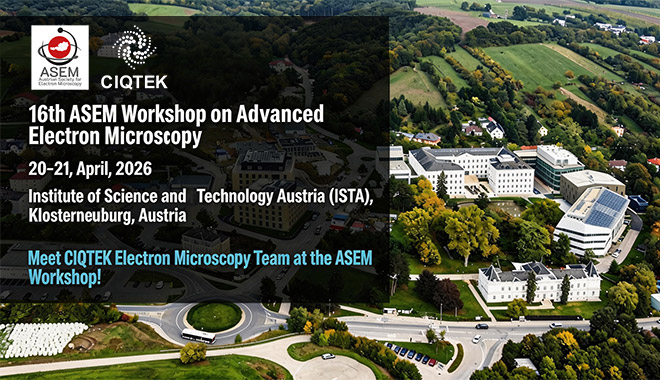
Latest Electronics News & Trends | Expert Insights & Innovations
CIQTEK

CIQTEK to Exhibit at the 59th RSC ESR Group Meeting 2026, UK

CIQTEK will exhibit at the 59th International Meeting of the RSC ESR Group together with our UK partner SciMed. We will display the CIQTEK EPR200M benchtop EPR spectrometer on site, fully installed and ready for live demonstration and sample testing.

The event will take place from April 13th to 16th at the University of Essex in Colchester, England. If you are working in EPR spectroscopy UK, this is a great chance to see our system up close and try it yourself.


Live Demonstration of the CIQTEK EPR200M

At this year's meeting, we will also bring the real instrument as always!

The CIQTEK EPR200M is our compact X-band benchtop EPR system designed for:

  • University teaching labs

  • Routine research measurements

  • Industrial quality control

  • Entry-level EPR users

  • Labs looking for a cost-effective second system

During the conference, visitors will be able to:

  • See the EPR200M operating in real time

  • Explore the software interface

  • Discuss system configuration in detail

  • Bring samples for on-site testing

  • Talk directly with CIQTEK engineers and SciMed specialists

We know that for many researchers, performance claims only matter when you see real data. That is why we encourage you to bring your own samples. There is no better way to evaluate an EPR spectrometer than by running your own experiment.


A Complete CIQTEK EPR Product Line

While the EPR200M will be physically displayed, CIQTEK offers a full portfolio of EPR spectrometer systems to meet different research levels and application needs.

-  X-band CW EPR Spectrometers

Designed for high sensitivity and stable long-term operation. Suitable for routine measurements and advanced research applications across chemistry, materials science, and life sciences.

-  Pulse EPR Systems

Built for users working in spin dynamics, quantum materials, and biological structure studies. These systems provide precise microwave pulse control and flexible expansion for advanced experiments.

-  Benchtop EPR

Compact and accessible systems such as the EPR200M, ideal for teaching labs, routine analysis, and industrial use.

-  EPR Upgrade Solutions

In addition to new instruments, CIQTEK provides upgrade solutions for aging EPR systems. Many laboratories have legacy EPR spectrometers with stable magnets but outdated electronics or control systems. Our upgrade solutions can:

  • Modernize microwave bridges and control units

  • Improve signal-to-noise performance

  • Update software interfaces

  • Extend instrument service life

  • Reduce the need for full system replacement

For labs with budget constraints or long-term infrastructure considerations, upgrading can be a smart and practical path forward. We will be happy to discuss specific upgrade scenarios during the meeting.


About the RSC ESR Group Meeting

The RSC ESR Group meeting is one of the key annual gatherings for the UK Electron Paramagnetic Resonance community. It brings together scientists from chemistry, physics, materials science, life sciences, and industry.

Over four days, participants share research results, discuss technical challenges, and explore new instrumentation solutions. The atmosphere is focused and highly interactive, which makes it ideal for in-depth technical conversations.

We are proud to support this community and to participate alongside our UK distributor.


CIQTEK and SciMed: Local Support for UK EPR Users

CIQTEK will exhibit together with SciMed, our official partner in the United Kingdom.

Through this partnership, UK users benefit from:

  • Local sales and application consultation

  • Installation and training support

  • Responsive service and maintenance

  • Long-term upgrade planning

When investing in an Electron Paramagnetic Resonance system, support and reliability are just as important as specifications. With SciMed’s local presence and CIQTEK's engineering team, UK customers have both.


Meet Us in Colchester, April 13–16, 2026

Event: 59th International Meeting of the RSC ESR Group
Date: April 13th to 16th, 2026
Location: University of Essex, Colchester, England

If you are attending the meeting, please stop by our booth to see the CIQTEK EPR200M live. You are also welcome to contact us in advance to schedule a dedicated discussion or sample testing time.


We look forward to meeting the UK EPR community in person and showing how the CIQTEK EPR spectrometer portfolio can support your research and applications.


CIQTEK to Exhibit at the 59th RSC ESR Group Meeting 2026, UK

阅读全文......

CIQTEK Exhibits at SMTA and TSM 2026, Expands U.S. SEM Presence

2026 is a fresh start for CIQTEK Electron Microscope USA operations.

This year, we officially formed a dedicated CIQTEK US team. That means more local presence, faster response, and closer communication with customers across the country.

And we are not staying behind a desk.

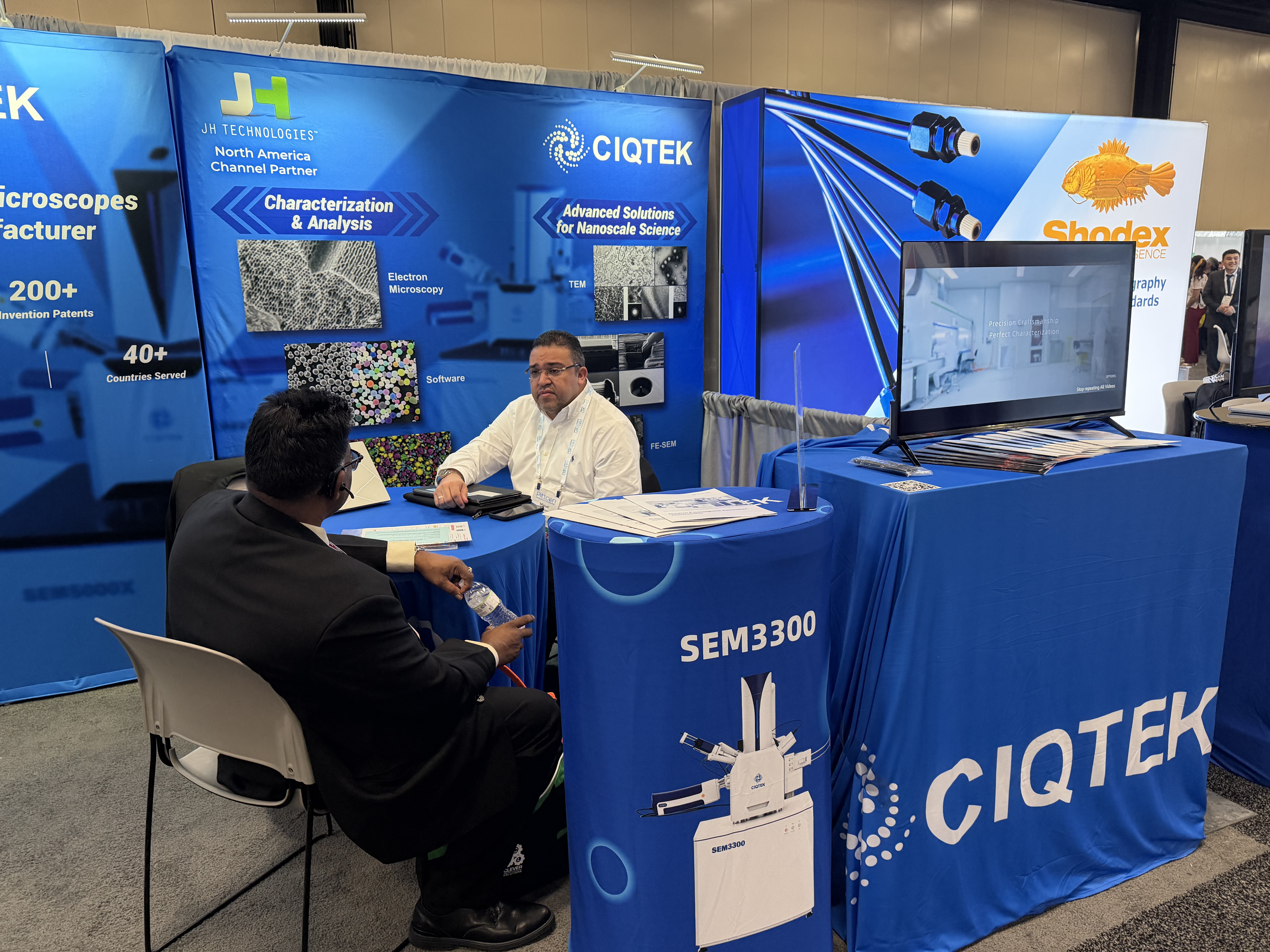
Our U.S. team, together with our official local distributor, JH Technologies, recently participated in the SMTA Wafer-Level Packaging Symposium 2026 and the 60th Anniversary Meeting of the Texas Society for Microscopy (TSM).


Supporting Advanced Packaging at SMTA 2026

At the SMTA Wafer-Level Packaging Symposium in San Francisco, we connected with engineers and technical experts working in advanced semiconductor packaging. 

As devices continue to shrink, inspection and defect analysis become more demanding. Reliable SEM solutions USA customers can trust are more important than ever. We had open, practical conversations about real challenges in wafer-level packaging. Topics included imaging resolution, surface characterization, and process optimization.

These discussions help us better understand how the CIQTEK electron microscope can support advanced manufacturing and research applications.


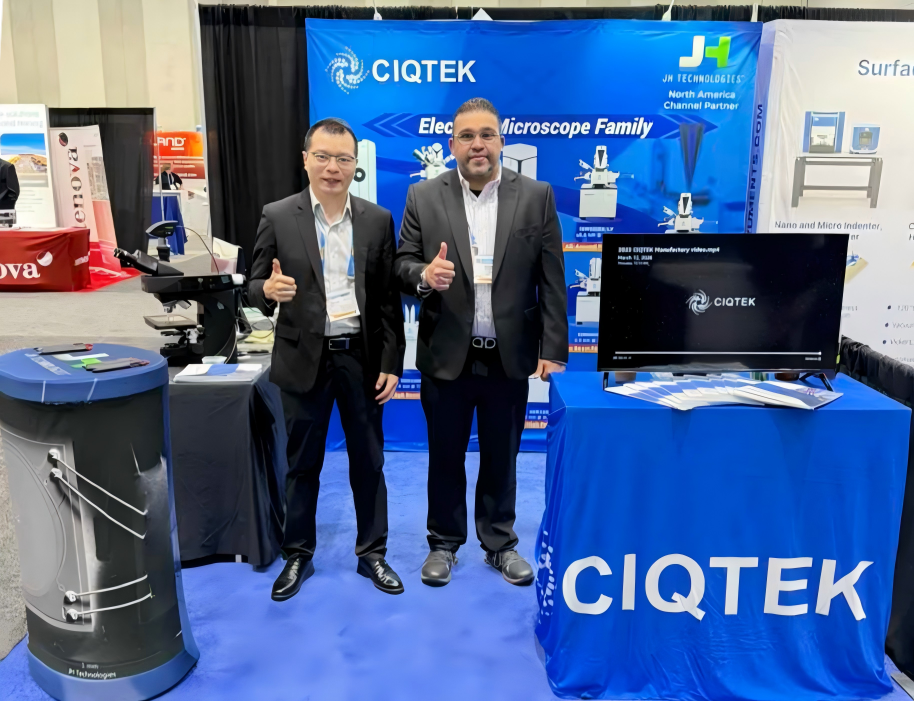
CIQTEK at the SMTA Wafer-Level Packaging SymposiumCIQTEK and JH Technologies at the SMTA 2026


TSM 2026: The Start of Regional Engagement

The 60th Anniversary Meeting of the Texas Society for Microscopy was especially meaningful.

Unlike large national exhibitions, microscopy society events in the USA, such as TSM, allow for closer, more personal conversations. We met researchers, lab managers, and industry professionals from materials science, life sciences, and industrial labs.

For CIQTEK, TSM 2026 is the starting point of a broader plan. Our new CIQTEK US team will continue visiting regional microscopy societies across the country. We believe real relationships are built face-to-face.


CIQTEK at the TSM 2026


2026 Is Just the Beginning

The launch of our CIQTEK US team marks a new phase for CIQTEK electron microscope USA development.

We are investing in local support.
We are building stronger partnerships.
We are becoming part of the American microscopy ecosystem.

More regional visits are coming.
More technical exchanges are ahead.

2026 is not just another year. It is the year CIQTEK steps closer to the U.S. microscopy community.

And this is only the beginning.

阅读全文......

CIQTEK at Livigno Snow Park Honoring the Olympic Spirit with Scientific Spirit

The energy was intense. The snow was flying. The crowd was electric.

As part of our Winter Olympics 2026 story, CIQTEK invited our Italian partner Media System Lab to attend the competition at Livigno Snow Park as our special on-site representative.

They were there in person. Right at the venue. Capturing the atmosphere, the emotion, and the unforgettable moments from the 2026 Winter Olympics.

It was powerful. And it reminded us why the Olympic spirit matters far beyond sports.


When Science Meets the Olympic Spirit

At CIQTEK, we develop advanced scientific instruments, including SEM, NMR, EPR, BET systems, etc. Our work supports researchers who spend years chasing answers that most people never see.

Scientific progress is not instant. It takes patience. It takes resilience. It takes the willingness to refine and improve again and again.

That is why the scientific spirit aligns so naturally with the Olympic spirit.

Both are about:

  • Relentless improvement

  • Long-term commitment

  • Precision and control

  • Teamwork across borders

At Livigno Snow Park, our partner Media System Lab witnessed elite athletes pushing their physical limits. Back in laboratories around the world, scientists push technological and intellectual limits every day.

Different fields. Same mindset.


CIQTEK and Media System Lab: Partnership in Action

Global innovation depends on trusted partnerships. CIQTEK's collaboration with Media System Lab reflects our belief that strong local partners create a stronger global impact.

While athletes represent their nations on the slopes, our partners represent shared values in science and technology. Together, we build something bigger than any single company.


CIQTEK and Media System Lab


Why This Moment Matters for CIQTEK

Being part of the Winter Olympics 2026 story through Livigno Snow Park is meaningful for us.

It represents connection.

Connection between science and sport.
Connection between Italy and the global research community.
Connection between ambition and achievement.

The athletes compete for gold.
Scientists compete against the unknown.

Both inspire us to aim higher.


The competitions will end. The medals will be awarded. The crowds will go home.

But the spirit continues.

At CIQTEK, we carry that energy forward. Into our labs. Into our engineering teams. Into every collaboration around the world.

Because excellence is not a moment.

It is a mindset.


A group photo of the CIQTEK mascot, Matteo from the MS lab, and the Winter Olympics mascot

阅读全文......

CIQTEK to Participate in French EPR Society Meeting – ARPE Days 2026 in Paris

CIQTEK is pleased to announce its participation in the French EPR Society Meeting – ARPE Days 2026, taking place March 19–20, 2026, at Chimie ParisTech in Paris, France. The event brings together researchers, instrument specialists, and industry partners from across Europe to exchange the latest advances and practical applications in Electron Paramagnetic Resonance (EPR).


A Key Meeting Point for the EPR Community

ARPE Days serves as an important annual gathering for the French and broader European EPR community. The meeting provides a platform for discussing developments in magnetic resonance methods, new experimental approaches, and real-world research applications across chemistry, physics, materials science, energy research, and life sciences.

For CIQTEK, the event is also an opportunity to reconnect with long-standing collaborators and meet new researchers exploring advanced EPR solutions for their laboratories.


CIQTEK EPR: Expanding Across Europe

Over the past few years, CIQTEK EPR spectrometers have been successfully delivered to multiple leading research organizations and universities across Europe, supporting work in free radical studies, catalysis, battery research, materials characterization, and quantum-related investigations.

At ARPE Days 2026, visitors will be able to learn more about CIQTEK's growing EPR portfolio, including:

  • Benchtop EPR systems, offering compact, cost-effective solutions for routine measurements and teaching labs

  • High-performance CW EPR spectrometers for advanced research applications

  • Pulse EPR systems supporting more sophisticated spin dynamics and structure investigations

  • Q-band and W-band EPR solutions for higher resolution and sensitivity in cutting-edge research fields

  • Supporting accessories and upgrades, including temperature control and application-driven configurations

In addition to new systems, CIQTEK also provides EPR modernization and upgrade solutions, enabling laboratories to extend the lifetime and capabilities of existing instruments through electronics, control system, and performance upgrades without requiring full instrument replacement.


Real Applications, Real Labs

Researchers interested in practical use cases can also explore , where laboratories worldwide share how EPR is being used to solve real research challenges.

From energy materials to catalytic mechanisms and paramagnetic defect analysis, these stories highlight how EPR moves beyond theory into everyday lab impact. Visitors and readers are encouraged to explore the EPR Customer Stories section on the CIQTEK website to see how different research groups are applying the technology.


Meet CIQTEK in Paris

CIQTEK looks forward to engaging with the EPR community in Paris, exchanging ideas, and exploring future collaborations!

For more information or to schedule a meeting during the event, feel free to contact the CIQTEK team in advance.


See you in Paris this March!


CIQTEK to Attend French EPR Society Meeting ARPE Days 2026, Paris

阅读全文......

CIQTEK EPR200M Enables Peer-Reviewed Tau–Membrane Research at Univ. Bordeaux, France

Key Findings and Value at a Glance

Understanding how intrinsically disordered proteins interact with biological membranes is a long-standing challenge in biophysics. In a recent study published in Biophysical Chemistry (2026, 329:107550), Dr. Yann Fichou and his team at the University of Bordeaux, France, developed a robust quantitative EPR spectroscopy method to directly measure Tau protein–lipid interactions. Their approach does not rely on indirect probes or relative fluorescence signals, enabling precise, absolute quantification of both free and membrane-bound protein populations.

Using the CIQTEK EPR200M benchtop X-band EPR spectrometer, the team quantitatively resolved the binding behavior of Tau protein to negatively charged lipid membranes, extracted absolute concentrations of free and bound protein populations, and determined binding affinity with minimal experimental input. This work not only reveals key mechanistic insights into Tau–membrane interactions, but also demonstrates the power of CW EPR for quantitative analysis in complex biological systems.


CIQTEK EPR200M Enables Peer-Reviewed Tau–Membrane Research at Univ. Bordeaux, France


Background: Why Quantifying Protein–Lipid Interactions Is So Difficult

Protein–lipid interactions play a central role in cellular signaling, membrane organization, and the aggregation of pathological proteins. In neurodegenerative diseases such as Alzheimer’s disease, the interaction between Tau protein and cellular membranes is believed to be a critical early event that triggers pathological aggregation.

Despite its importance, quantitative characterization of these interactions remains challenging. Biological membranes are heterogeneous, dynamic, and highly sensitive to experimental conditions. The interactions themselves are often weak, transient, and involve multiple conformational states. Conventional methods such as fluorescence or colorimetric assays typically provide relative signals and require calibration curves that introduce additional uncertainty.

EPR spectroscopy offers a fundamentally different approach. By directly probing the dynamics of spin-labeled molecules, quantitative EPR provides a sensitive and accurate window into molecular motion, binding, and conformational restriction, enabling precise determination of protein–lipid interactions.


From Spectral Line Shapes to Molecular Binding Dynamics

Tau is an intrinsically disordered protein, and its interaction with lipid membranes involves subtle changes in molecular mobility rather than large structural rearrangements. This makes CW EPR particularly well suited to the problem.

Tau protein was site-specifically labeled using site-directed spin labeling (SDSL). Continuous-wave EPR spectra were acquired on the CIQTEK EPR200M at room temperature and 150 K while increasing the concentration of POPS multilamellar vesicles (MLVs).

Free Tau shows a narrow, symmetric three-line spectrum corresponding to rapid isotropic motion (τc ≈ 0.383 ns), characteristic of intrinsically disordered proteins. As POPS concentration increases, spectral broadening and longer rotational correlation times (up to 2.25 ns) indicate progressive restriction of Tau motion upon membrane binding.


From Spectral Line Shapes to Molecular Binding DynamicsFigure 1. (A) Room-temperature CW-EPR spectra of spin-labeled Tau during titration with increasing concentrations of POPS MLVs, showing gradual line-shape changes.
(B) Frozen-state (150 K) EPR spectra and simulations of spin-labeled Tau in the absence (blue) and presence (red) of 25 mM POPS MLVs.
(C) Room-temperature EPR spectrum of Tau monomers in a free environment.
(D) Room-temperature EPR spectrum of Tau monomers in a restricted environment. Tau concentration was 50 μM. The free environment corresponds to Tau in buffer, while the restricted environment corresponds to Tau in solution containing MLVs.


Absolute Quantification via Two-Component Spectral Deconvolution

A key breakthrough of this work is the use of EPR signal intensity for absolute quantification. Signal intensity is directly proportional to the number of unpaired electrons, allowing precise determination of free and bound protein concentrations without calibration standards.

Using the high baseline stability and signal-to-noise ratio of the CIQTEK EPR200M, experimental spectra were linearly decomposed into free and membrane-bound components. This two-component deconvolution enables calculation of absolute protein concentrations, providing a solid foundation for constructing Hill-type binding models and determining apparent dissociation constants (K_D).


Absolute Quantification via Two-Component Spectral DeconvolutionFigure 2. (A) Experimental EPR spectra of spin-labeled Tau at different POPS concentrations (black) and corresponding best-fit simulations (blue to red).
(B) Example of spectral decomposition into free (blue) and bound (orange filled) components.


Minimalist Strategy for Rapid and Accurate Affinity Determination

Error propagation analysis identified optimal conditions for accurate K_D determination: when approximately half of the Tau population is bound (θ ≈ 0.4–0.6), experimental uncertainty is minimized. A single EPR measurement using the EPR200M suffices to obtain apparent dissociation constants matching full titration results, reducing both experimental time and precious sample consumption.


Reliable Performance Trusted by International Users

The CIQTEK EPR200M demonstrates stable microwave performance, sensitive detection, and reliable room-temperature operation. These features support reproducible data acquisition for complex biological samples, from room-temperature dynamics to low-temperature hyperfine analysis.

The successful application at the University of Bordeaux confirms that CIQTEK instruments provide robust support for frontier life science research in Europe and globally.


CIQTEK EPR Solutions for Quantitative Research

CIQTEK offers a comprehensive range of EPR instruments:

  • X-band CW & pulsed systems: benchtop or floor-standing, compatible with variable temperature, light, electrochemistry, and in situ modules.

  • High-field Q- and W-band systems: higher magnetic fields and spectral resolution for materials, quantum states, and advanced biophysical studies.

CIQTEK EPR Instruments

With proven performance, CIQTEK EPR instruments are installed across Europe, North America, and Asia, supporting hundreds of research labs and industrial partners worldwide.

阅读全文......

CIQTEK to Showcase Electron Microscopy Solutions at The Minerals, Metals & Materials Society (TMS) 2026, USA

CIQTEK is excited to participate in The Minerals, Metals & Materials Society (TMS) 2026 Annual Meeting & ExhibitionMarch 15–19, 2026 at the San Diego Convention Center and Hilton San Diego Bayfront in San Diego, California, USA.

Our U.S. team will be on site to provide local support and product consultation.


TMS is a long‑standing international gathering of materials scientists, engineers, researchers, and industry professionals. The event draws over 4,000 attendees from around the world and features technical sessions, workshops, and an exhibition focused on the practical side of minerals, metals, and materials research and technology.


Meet CIQTEK Electron Microscopy Solutions at Booth #307

At Booth #307, CIQTEK will showcase its Electron Microscopy solutions, including:

  • TEM for internal structure and nanostructure analysis

  • FIB-SEM for site-specific sample preparation and 3D imaging

  • FE-SEM for high-resolution imaging

  • Tungsten filament SEM for general materials analysis

  • Entry-level SEM for laboratories starting electron microscopy

These systems cover a wide range of materials characterization needs, from basic surface imaging to advanced studies.


Local Partner Presence

CIQTEK's U.S. distributor, JH Technologies, will also be at the booth.

For inquiries or to schedule time with CIQTEK U.S. team at TMS, please contact info.usa@ciqtek.com

We look forward to welcoming you at Booth #307 in San Diego to explore practical microscopy solutions.


CIQTEK to Showcase Electron Microscopy Solutions at The Minerals, Metals & Materials Society (TMS) 2026, USA

阅读全文......

CIQTEK to Exhibit at Pittcon 2026 in San Antonio, USA

CIQTEK is pleased to announce its participation in Pittcon 2026, one of the world's leading conferences and exhibitions for laboratory science and analytical instrumentation.

----------------------

Conference: March 7–11, 2026
Exposition: March 9–11, 2026
Location: Henry B. González Convention Center, San Antonio, TX, USA
Booth: #1113

----------------------

During Pittcon 2026, CIQTEK will showcase its latest solutions in materials characterization and analytical research, and engage with researchers, engineers, and industry professionals from around the world.


Featured Advanced Scientific Instrument Solutions

At Booth #1113, visitors will have the opportunity to learn more about CIQTEK's flagship solutions:

  • Scanning Electron Microscopes (SEM) for high-resolution imaging and materials analysis

  • Nuclear Magnetic Resonance (NMR) Spectrometers for structural and chemical analysis

  • Electron Paramagnetic Resonance (EPR) Spectrometers for studying paramagnetic species in chemistry, physics, and life sciences

  • BET Surface Area and Porosity Analyzers for precise surface and pore characterization

These systems are widely used in applications such as advanced materials, energy research, catalysis, pharmaceuticals, and academic research laboratories.


CIQTEK USA Team and Local Support

CIQTEK USA team will be present at Pittcon 2026 to provide localized support, product consultation, and service information for North American customers. With a growing local presence, CIQTEK is committed to delivering responsive sales and after-sales support in the U.S. market.

For meeting requests or inquiries before and during the event, please contact: info.usa@ciqtek.com


We look forward to welcoming you at Booth #1113 in San Antonio!


CIQTEK to Exhibit at Pittcon 2026 in San Antonio, USA

阅读全文......

CIQTEK to Participate in the 60th Anniversary Meeting of the Texas Society for Microscopy (TSM 2026)

CIQTEK is pleased to announce its participation in the 60th Anniversary Meeting of the Texas Society for Microscopy (TSM), which will take place on February 19–20, 2026, at The University of Texas at Austin, USA.

Marking six decades of contributions to the microscopy community, TSM 2026 brings together researchers, facility managers, and industry professionals to discuss both the legacy and the future of microscopy. CIQTEK is honored to be part of this milestone event and to engage with the Texas and broader U.S. microscopy community.


CIQTEK to Participate in the 60th Anniversary Meeting of the Texas Society for Microscopy (TSM 2026)


Supporting Advanced Microscopy with Practical, High-Performance EM Solutions

At TSM 2026, CIQTEK will showcase its growing portfolio of electron microscopes (EM), designed to meet the evolving needs of academic research, shared facilities, and industrial laboratories.

CIQTEK's EM product line covers a wide range of applications, from routine imaging to advanced materials characterization, including:

Across the portfolio, CIQTEK focuses on delivering reliable imaging performance, intuitive system operation, and long-term ownership value, helping laboratories achieve consistent results without unnecessary complexity.


Engaging with the Microscopy Community

CIQTEK views conferences like TSM not only as an opportunity to present instrumentation, but also as a platform for meaningful technical exchange. During the meeting, the CIQTEK team looks forward to discussing real-world microscopy challenges, system selection considerations, and long-term operational needs with users across materials science, life science, and industrial applications.


For attendees interested in learning more about CIQTEK EM solutions or exploring potential collaborations, CIQTEK warmly welcomes conversations during the meeting in Austin!


Local Support from CIQTEK USA

To better serve customers in North America, CIQTEK maintains a local branch in the United States, providing regional sales support, application consultation, and long-term service assistance for electron microscopy users.

For more information about CIQTEK EM solutions or to connect with the CIQTEK USA team, please contact us at info.usa@ciqtek.com.


阅读全文......

CIQTEK EPR200M with 3D-Printed Electrolytic Cell Enables Operando Detection of Radical Intermediates

Understanding the formation of radical intermediates is key to controlling electrochemical reaction rates and selectivity. These short-lived species at the electrode interface dictate outcomes, and relying solely on final products can lead to speculative mechanisms. With operando EPR using CIQTEK benchtop EPR200M, researchers can directly capture radicals in situ, mapping their formation sequence and structural fingerprints for robust mechanistic evidence.

A recent collaboration between Beijing University of Technology (Sun Zaicheng / Liu Yichang), Tsinghua University (Yang Haijun), and Wuhan University (Lei Aiwen) introduced a novel 3D-printed electrolytic cell tailored for in situ EPR. Fabricated with high-precision digital light processing (DLP), this flat cell enables reproducible integration with electrochemical systems. Their results, published in Chemical Engineering Journal under the title Bespoke electrolytic cell for operando EPR tests: Revealing the formation and accurate structures of amino and phenolic radicals, demonstrate the workflow’s ability to uncover radical structures across representative reactions.


Methodological Breakthrough: 3D-Printed Flat Electrolytic Cell for Reproducible Operando EPR

High-dielectric solvents commonly used in electrochemical cells reduce EPR signal-to-noise, making radical detection challenging. The flat cell design mitigates dielectric losses and enhances the resonator’s Q factor, improving operando EPR performance.

Beyond physics, the cell is engineered for reproducibility. Using DLP 3D printing, electrode channels, positioning structures, and short-circuit protection are fixed during fabrication. This eliminates manual variability, reduces system resistance, and improves signal quality, while maintaining mechanical strength, solvent compatibility, and cost efficiency.

This approach transforms operando EPR into a workflow of "standardized structural component + reproducible procedure", enabling cross-team and cross-system reproducibility and mechanistic comparison.


Time-Resolved Evidence Tracks Radical Formation in C–N Coupling

In situ EPR with time-resolved acquisition allows mapping radicals in real-time, showing which species appear first and how they evolve. This provides a reproducible evidence chain at the intermediate level, moving mechanistic understanding beyond product-based inference.


Cycloaddition Intermediates Reveal Reaction Selectivity

By comparing substrate-specific spectra and calculating spin density, EPR signals are directly translated into radical structural fingerprints. This forms a closed-loop framework for explaining regio- and chemo-selectivity in (3+2) cycloaddition reactions.


Solvent Effects Guide C–O Coupling Design

In situ EPR shows that the same radical exhibits distinct spectra in MeCN versus HFIP. Combined with NMR, the study links solvent, radical structure, and reaction selectivity, providing an experimental evidence chain for optimizing reaction conditions.


Integrated CIQTEK EPR200M Platform for Operando Electrochemical Studies

The study integrates the 3D-printed flat electrolytic cell with a CIQTEK EPR200M benchtop X-band CW spectrometer and an electrochemical workstation, synchronizing “power-on” with spectral acquisition. This modular design reduces dielectric loss and assembly variability, lowering the barrier for deploying electrochemical EPR. Data comparability improves, and mechanistic evidence chains can be reproduced across different teams and reaction systems.


Collaboration & Application Opportunities

For researchers interested in operando electrochemical EPR, 3D-printed cell solutions, or building radical intermediate evidence chains, CIQTEK can assist with device interfaces, test workflows, and data interpretation. This enables translating paper-level mechanistic insights into reproducible, actionable experimental capabilities.

阅读全文......

CIQTEK and USTC Mark One Year of Collaboration at the High-End In Situ Electron Microscopy Joint Laboratory

Advanced instruments alone do not drive scientific breakthroughs. Real progress happens when technology and researchers work closely together.


One year after the launch of the High-End In Situ Electron Microscopy Joint Laboratory, the collaboration between the Engineering and Materials Science Experimental Center and CIQTEK has shown how a shared innovation mindset can unlock new possibilities in in situ materials research, micro- and nano-fabrication, and mechanics-related studies.

"Choosing CIQTEK was never just about purchasing an instrument," says Professor Ming Gong, Deputy Director of the Engineering and Materials Science Experimental Center."We chose a partner who could work with us to explore and solve frontier scientific challenges."


A Core Research Platform Powered by In Situ Electron Microscopy

The Engineering and Materials Science Experimental Center is one of six university-level public experimental platforms at the University of Science and Technology of China. It supports a wide range of disciplines, including mechanics, mechanical engineering, instrumentation science, and engineering thermophysics.

The center plays a key role in advancing research on material mechanical behavior, complex fluid systems, precision measurement, micro- and nano-device fabrication, and renewable energy materials. By combining open access with professional analytical services, it enables interdisciplinary collaboration and connects academic research with real industrial needs.

Within this framework, in situ electron microscopy has become a critical capability. It allows researchers to directly observe structural and functional changes in materials under real conditions, providing insights that traditional post-analysis methods cannot deliver.


Why a FIB-SEM Dual-Beam Microscope Matters

As materials science research continues to move toward smaller length scales and more dynamic processes, traditional sample preparation methods are no longer sufficient. Modern studies increasingly require site-specific preparation, in situ observation, and three-dimensional reconstruction at the micro- and nano-scale.

To meet these demands, the center introduced a FIB-SEM dual-beam electron microscope, supplied by CIQTEK. This advanced scientific instrumentation enables precise micro- and nano-fabrication while maintaining high-resolution imaging performance, making it an essential tool for frontier research.

"Our goal was very clear," Professor Gong explains. "We wanted to provide advanced experimental conditions that support breakthroughs in frontier science and engineering, while also offering a strong technical foundation for future industrial innovation."


CIQTEK FIBSEM at the High-End In Situ Electron Microscopy Joint LaboratoryCIQTEK FIBSEM at the High-End In Situ Electron Microscopy Joint Laboratory


Choosing CIQTEK: Technology, Reliability, and Collaboration

During the instrument selection process, the center focused on three core factors: system stability, performance precision, and long-term technical support.

"The core specifications of CIQTEK's FIB-SEM are already on par with world-leading systems," says Professor Gong. "That gave us confidence from the start. What truly convinced us, however, was CIQTEK's openness to collaboration."

CIQTEK worked closely with researchers to understand real experimental needs, offering flexible support in application development and software compatibility. This approach turned the dual-beam electron microscope into a platform that could continuously evolve with ongoing research rather than remain a fixed configuration.


More Than Equipment: A Long-Term Research Partner

After more than a year of daily operation, the CIQTEK FIB-SEM dual-beam electron microscope has proven to be stable and reliable under high-intensity research conditions.

"The overall experience has exceeded our expectations," says Yu Bai, engineer at the Engineering and Materials Science Experimental Center. "The system performs consistently well in both micro- and nano-fabrication and high-resolution imaging, which is essential for our in situ materials research."

Just as important, CIQTEK has continued to track user feedback and translate research challenges into concrete optimization and upgrade directions. This ongoing interaction ensures that the instrument remains aligned with evolving experimental needs.


Fast Response to Non-Standard Experimental Challenges

One example clearly illustrates the value of this collaboration. During a project that went beyond the standard application scenarios of the system, the research team encountered a critical technical bottleneck.

"CIQTEK's application engineers came on site immediately," Bai recalls. "They worked with us to refine the experimental approach and quickly delivered a customized software upgrade."

This rapid response allowed the team to complete the experiment successfully and demonstrated how university–industry collaboration can directly accelerate scientific progress.

"At that moment, we truly felt what it means to have a partner," Bai adds. "Not just an equipment supplier, but a team that stays with us throughout the innovation process."


CIQTEK FIBSEM


Looking Ahead: Advancing In Situ Materials Research Together

The collaboration between the Engineering and Materials Science Experimental Center and CIQTEK offers a clear example of how advanced scientific instrumentation and close cooperation can support independent innovation.


As the High-End In Situ Electron Microscopy Joint Laboratory continues to develop, both sides will further focus on in situ materials research related to mechanics, micro- and nano-fabrication, and advanced experimental methodologies. Through continued collaboration, they aim to provide strong technical support for high-level research and future scientific breakthroughs.

阅读全文......